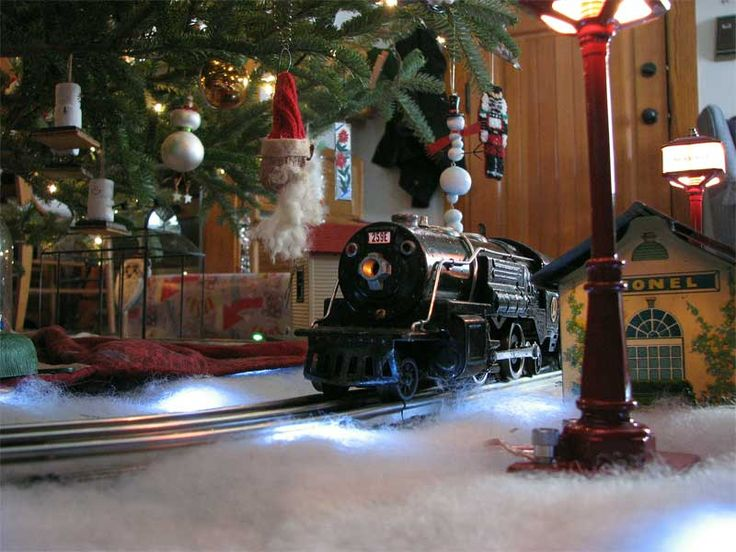
I’ve always wanted a little circle of track underneath my Christmas tree – particularly now since my girls are older and presents won’t get laid out until Christmas eve. Last Christmas I bought a loop of 2′ radius LGB track, and this Chritmas, I decided to get an engine going on it.
Locomotive Body
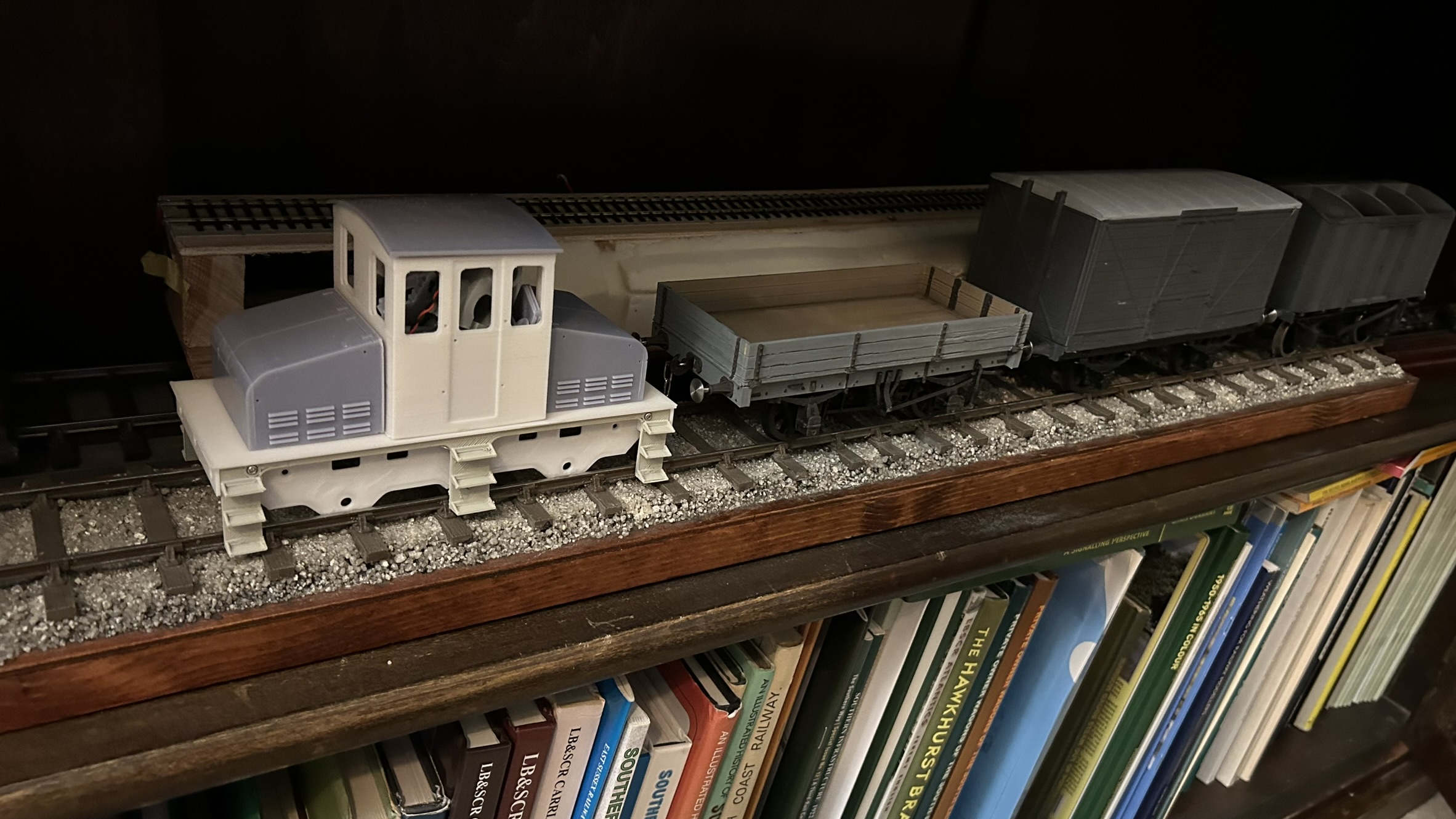
I’ve had the little LYR Battery Electric loco from G1-3D.uk printed and sitting in plain filament in a storage box or on my shelf since printing it as one of my first-ever Gauge 1 projects. It looked like this:
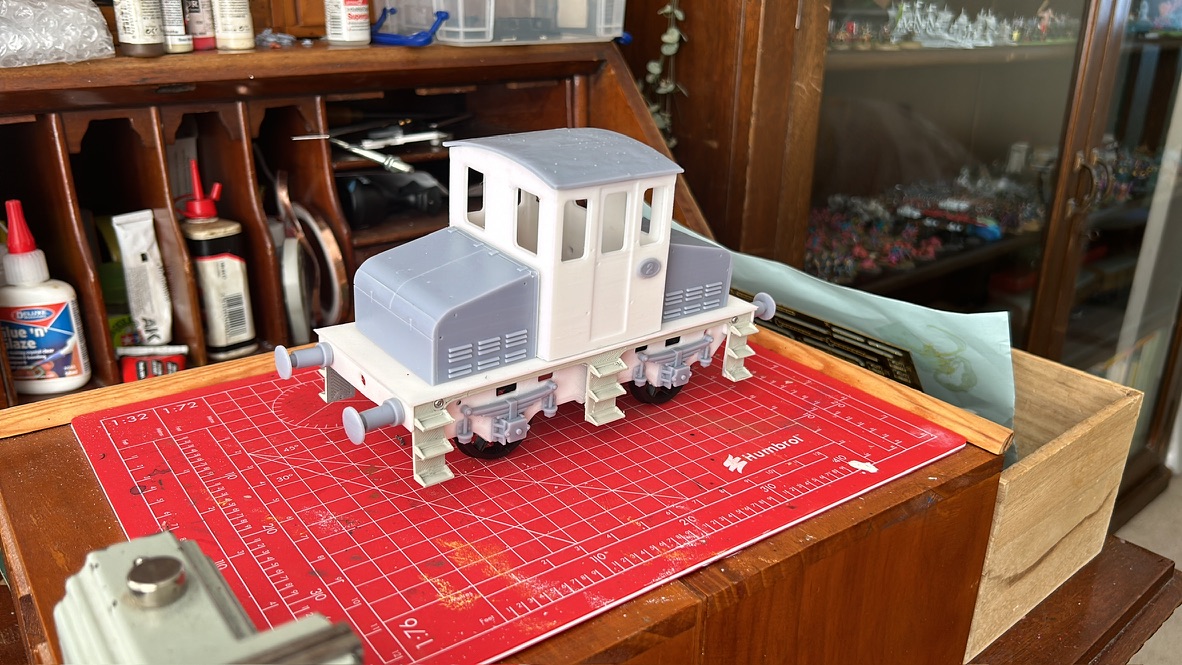
There was clearly a need to print off a few more parts and get the loco a little further on, which I did earlier in the year:
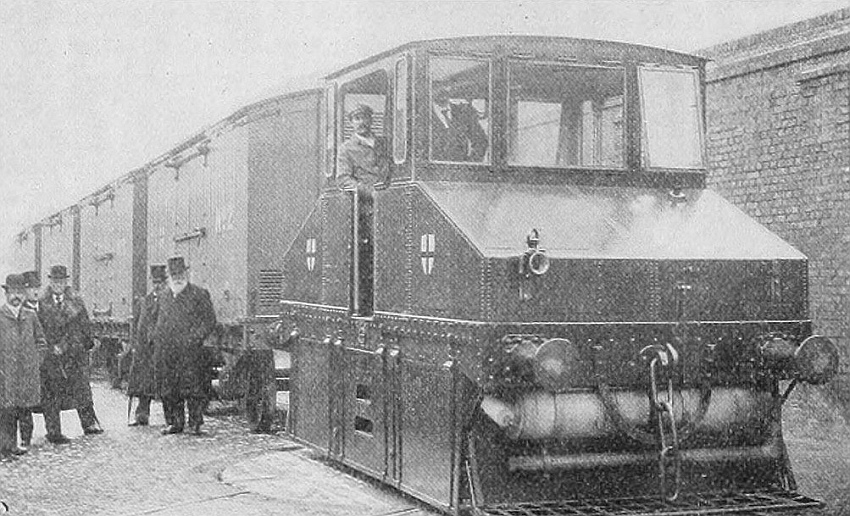
Though a relatively accurate representation of the tiny Lancashire loco, it was not in my core interest whatsoever – indeed I had considered a conversion into the Maudslay Petrol Electric loco seen in Deptford Cattle Market (watch this space…) shown below:
But this means it would be perfectly suitable for a freelance engine around the tree without too much jeopardy if it got damaged.
Motorisation
I had a locomotive that was almost totally complete and working, although I left my ‘test’ single N20 motor in it – so hardly up for heavy duty. It would hopefully however, be just right for pulling a 15T mineral wagon full of presents around the tree.
Painting and Detail
I set to work giving it a rough paintjob of black underneath the solebar and red body, with yellow beams and a grey roof – odd button’s purpose will be revealed in due course.

Electronics
Electronics are a bit of a black art for me, but it’s an area I absolutely must upskill on to continue this journey. For now, a simple DPDT, centre-off switch controls direction.
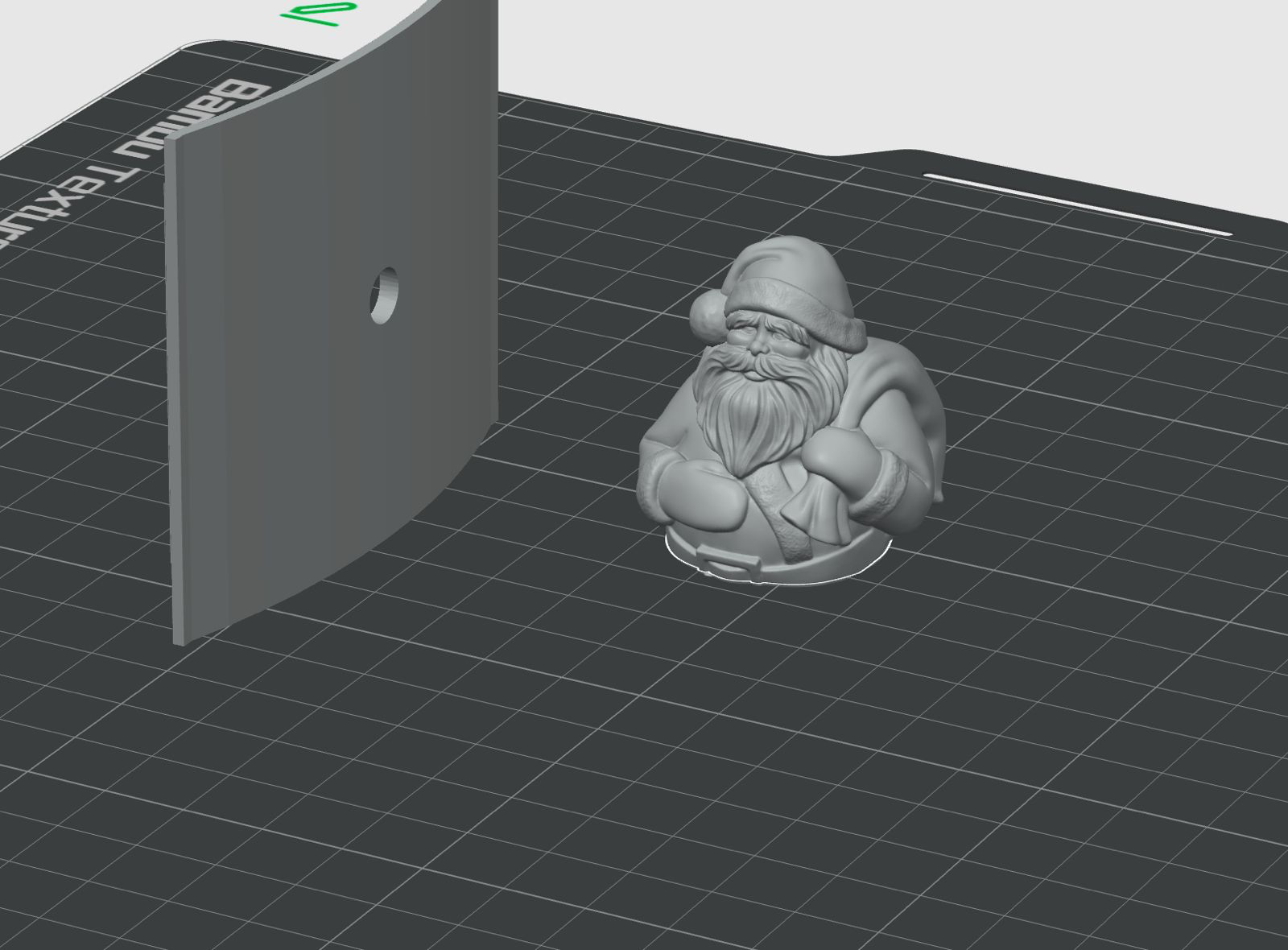
I modified the roof of the locomotive to have a circular hole for fitting a momentary-contact switch, shown here next to a Father Christmas model I split to put in the cab:
Result
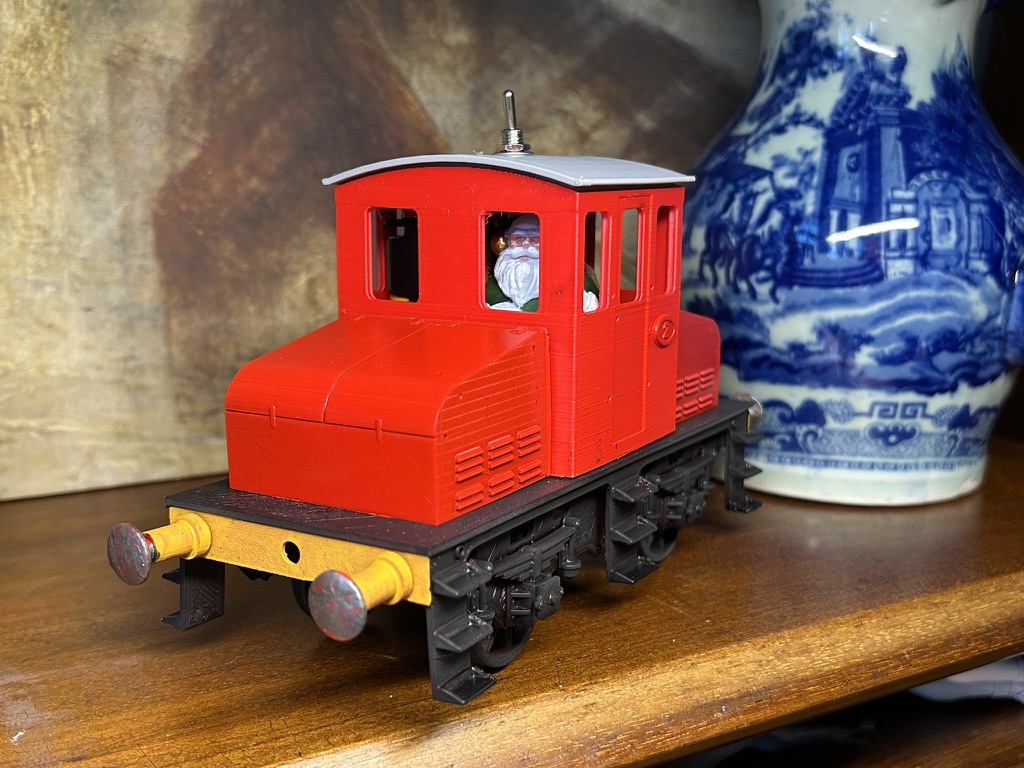
The finished model looks like this:
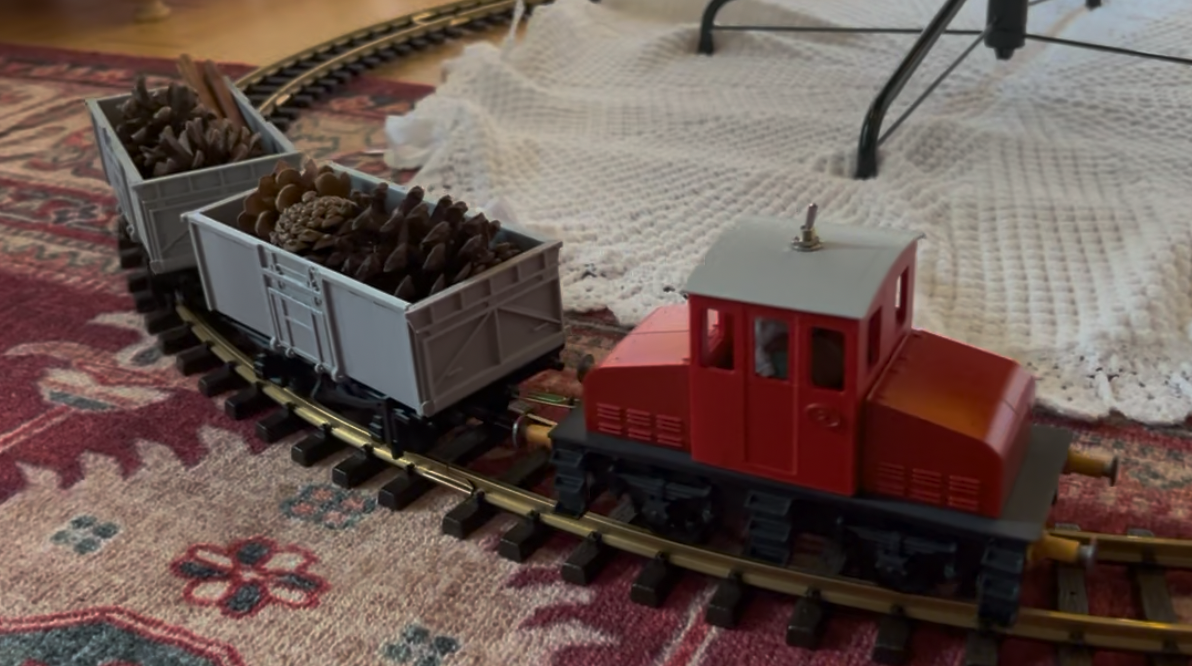
And around the tree – paperclips substituting as bar couplings:
Closing Thoughts
The brave little locomotive could just about manage a single 16T full of pine cones. Much more than that, even after adding some car-wheel balance weights under loco adjacent to the motor, was too much. A pair of motors, more ‘sticky’ wheels and a less tortuous radius might help.
I’m unlikely to change much with this engine as my eldest has already decided that remote control is for her, and for this to be a longer-term project it really needs pre-printing in PETG instead of the PLA I used previously – but may be good fodder for my youngest to fiddle with next year.
Merry Christmas!
 Interlocking
You must be logged in to post a comment.