One of the larger towns in Greece I am familiar with is Napflio – nestled in the crook of the Peloponesse, I have always noticed the modern station in the Port, and the remnants of the meter gauge tracks running alongside the motorway between Corinth and Athens, but I never really spent the time to find out about it, and I’m hoping to set that right.

Though the original plans for railway development in Greece were centred around standard gauge, a change of direction in 1882 took place with a larger system for internal Greek development with more extensive, cheaper routes was proposed. SPAP (Piraeus – Athens – Peloponnese Railways) operated the route between Athens and Napflion (and beyond). PAP was nationalised in 1939 and formally absorbed by the Hellenic State Railways in 1954..

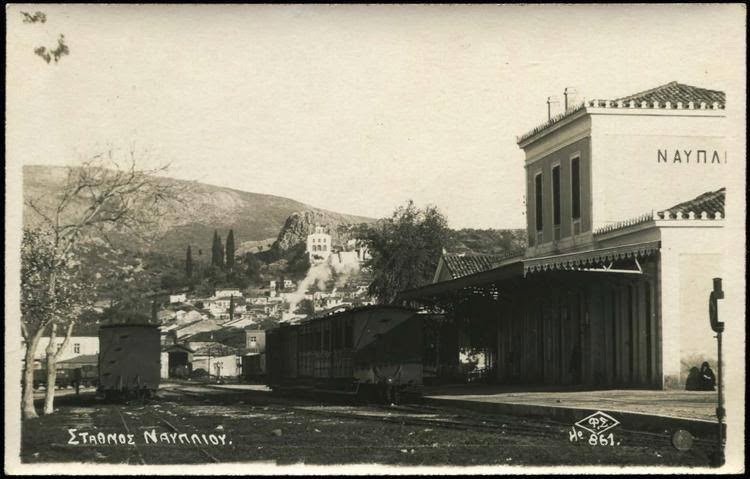
Passenger services continued until 1963, at which point they were stopped. Commercial freight services continued until 1972.
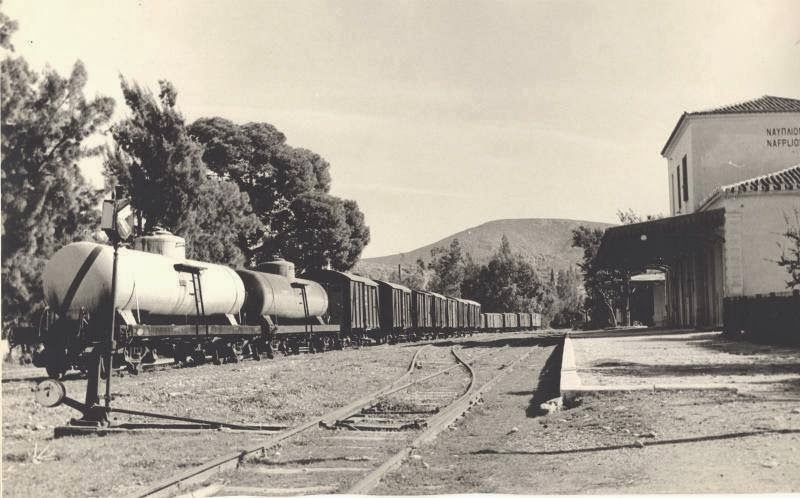
After final closure in 1972 the original site of Napflio station, owned by OSE, was donated to the City of Napflio and continues as a pleasure park area. A proportion of rails were still left in situ and the original station site played host to a number of charter trains.

In 1992 a new station site was developed on the port, approximately 200m from the original site, and in 1993 services commenced with twice-daily trains to Athens and four-times daily local trains Argos via Corinth. Services halted in 2005 until 2009, and after a brief reinstatement (to Argos only) were suspended indefinitely in 2011 as a cost-cutting measure.

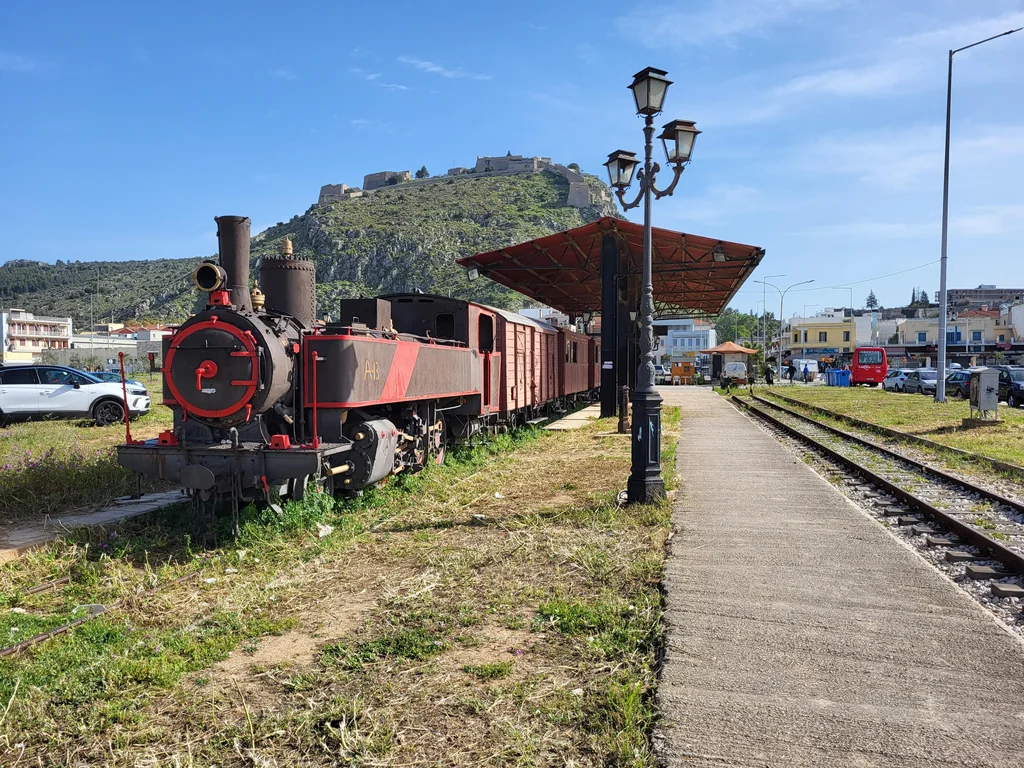
Unfortunately while there are ostensible plans to recommence services on the metre-gauge line, the sad reality is that this is unlikely to ever come to pass.

Rolling Stock
The majority of motive power utilised by the SPAP was built by Krauss of Germany, primarily of 2-6-0T designs, though a wide variety of wheel arrangements were seen, from USATC S118’s and Mallets through to tiny 0-4-0T tanks. An example of the Krauss design is shown above at Napflion station.

 Interlocking
You must be logged in to post a comment.