The CSX: Miami Downtown spur is a switching district layout, it is set in modern day Miami following the Miami River near the airport through to the produce district.
Essential Details:
- Scale: N
- Size 11′ x 7′
- Control Method: DCC
- Track: Atlas Code 55
Layout Plan

(click to enlarge)
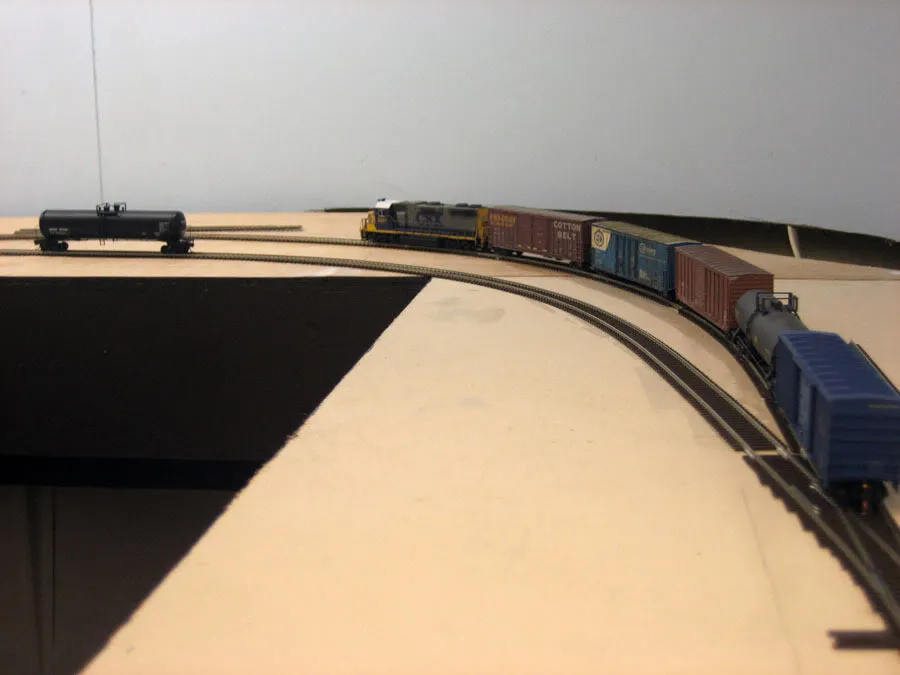
The layout starts on the bottom right corner of the centre peninsula. This is the route from Hialeah yard, it continues south towards the Bascule bridge but the downtown spur splits off just before, following the line of the Miami river. Scrap merchants and a propane dealer flank the line before it enters the produce district which continues all the wayaround the other side of the peninsula, including the prototype switchback.
Operations:
This layout is a distributed switching layout, occupying almost 40 linear feet of space for a single switching area. The area is criss-crossed by roads which can’t be blocked, and must be protected by flares before crossing. The cars are switched using CC/WB (in theory used as a mechanism to create a mimickry of a real-life CSX switchlist) for the single switching job which starts and terminates on the mainline at the end of the peninsula.
Gallery:
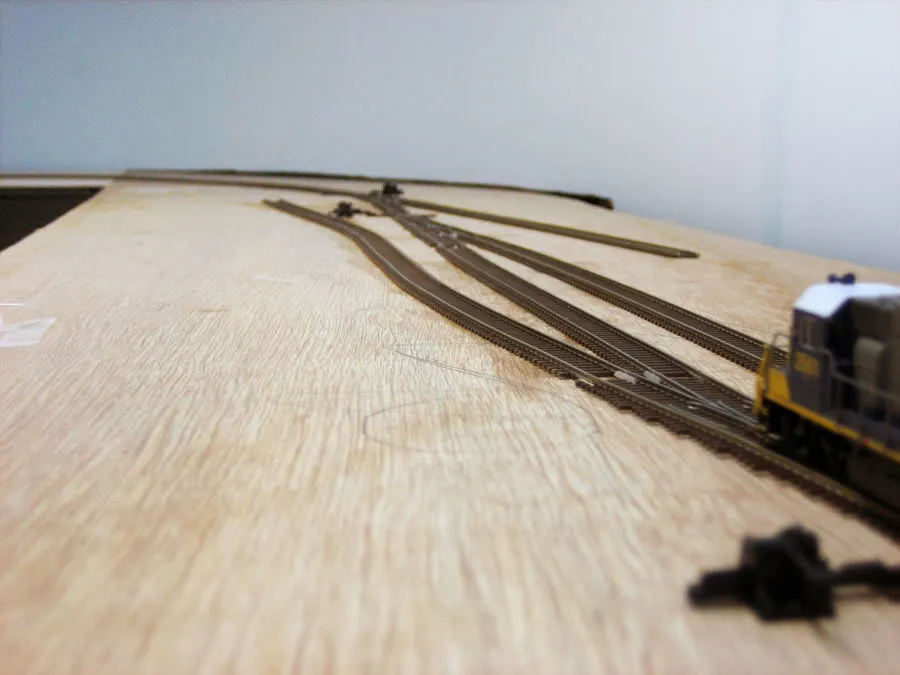
An early shot showing the peninsula:
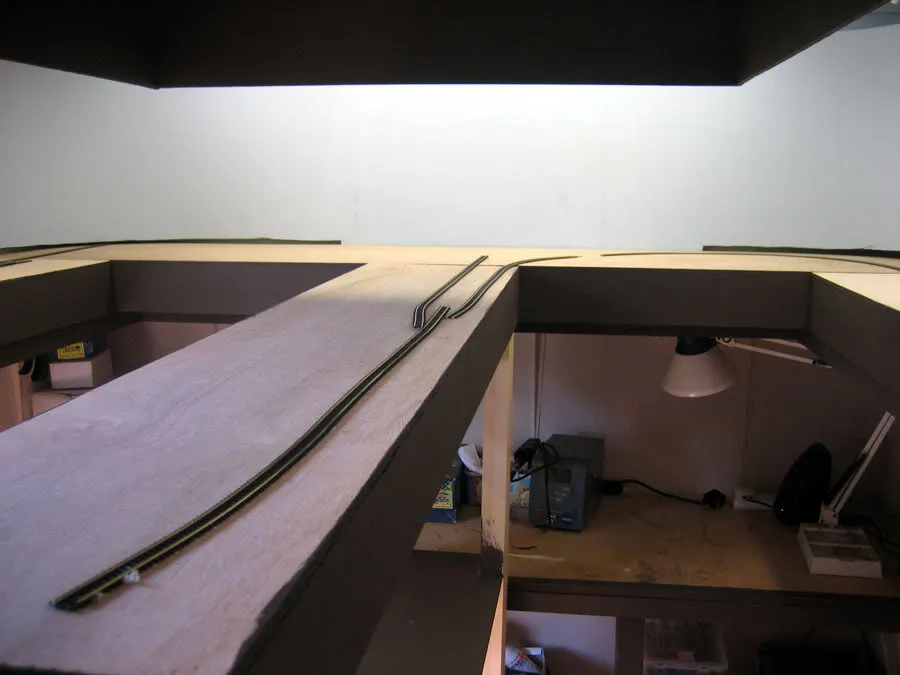
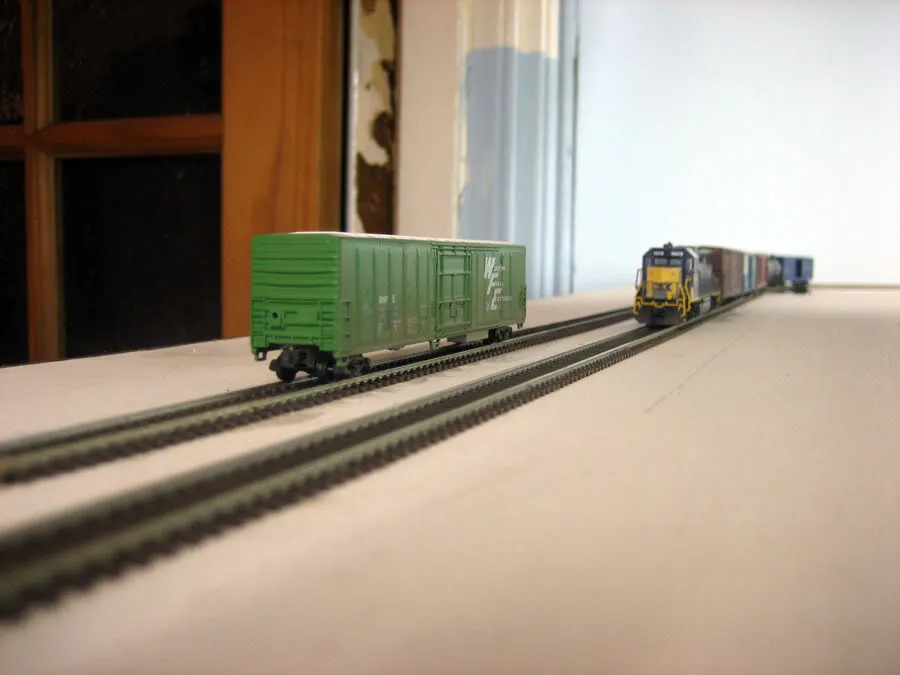
This is the CSX/Tri-Rail mainline, you are looking north towards Hialeah yard and the point of origin of our local.

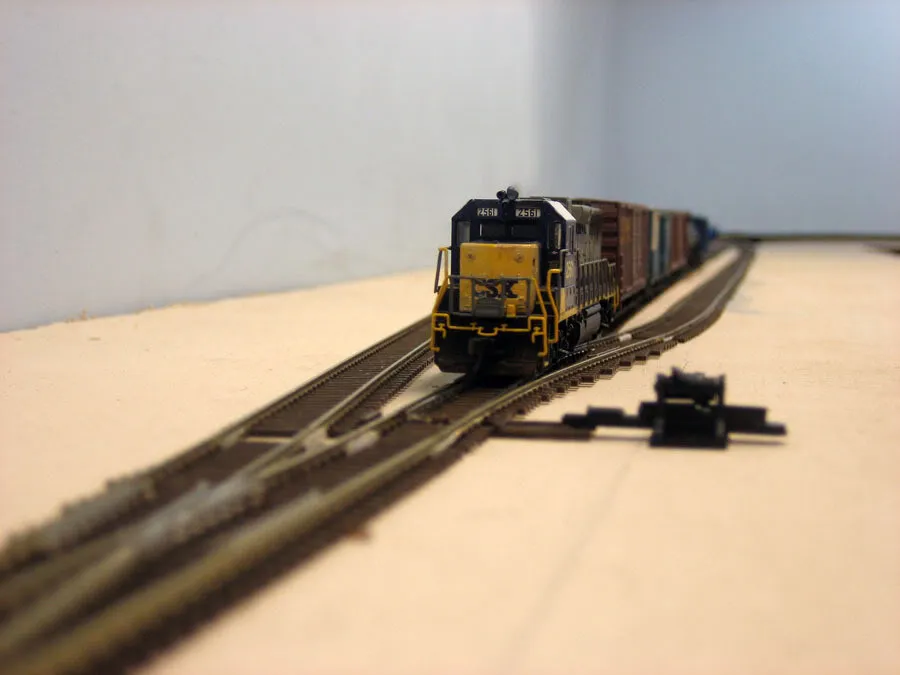
GP38-2 #2561 cuts the #10 switch leading to the downtown spur. If it were to carry on straight it’d pass over the Miami River via a bascule bridge, but there’s not much freight south of Miami these days.
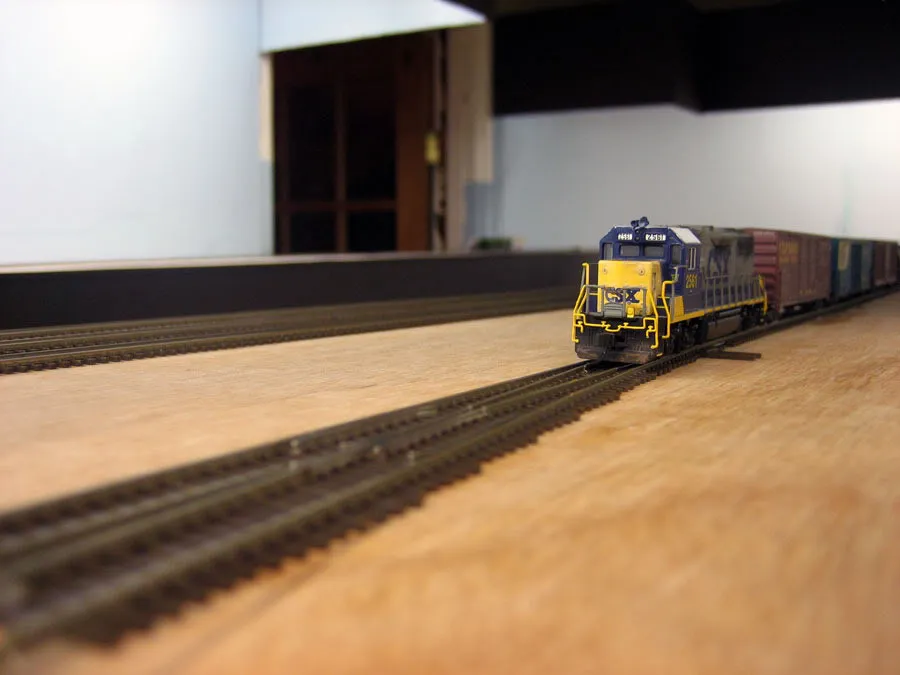
Curving the run parallel to the Miami River around the Fronton Jai-Alai (foreground).
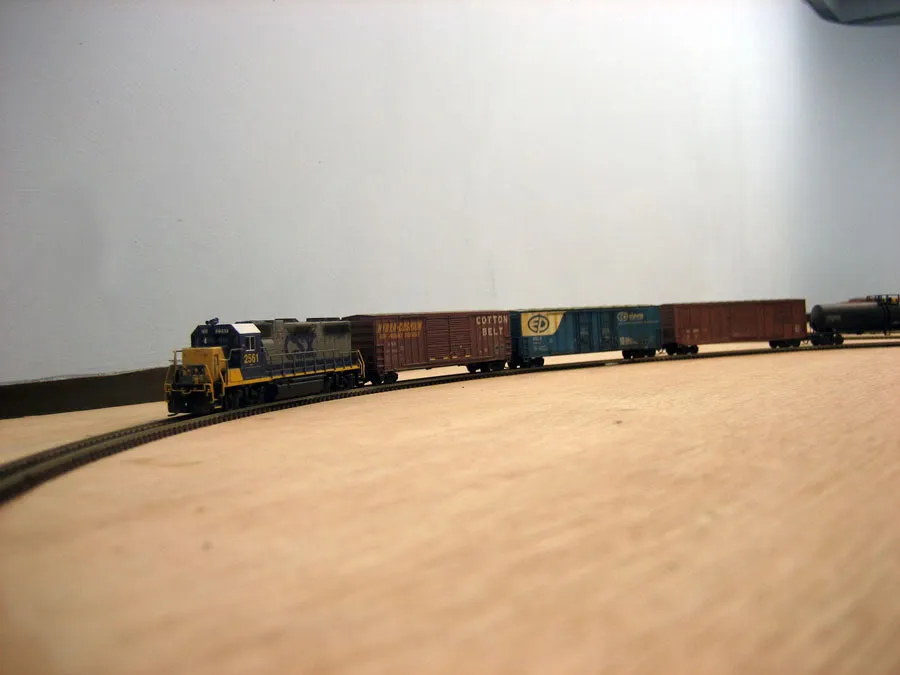
As #2561 continues we pass Ferrous Iron & Processing (right), and the passing siding that FP&T’s trackmobile shoves cars around. On the left is NorthWest River Drive, which runs parallel to the Downtown spur all the way into the Allapattah district.

A ground level shot as 2561 runs over the grade crossing leading to Miami Iron and Metal’s facility (behind)
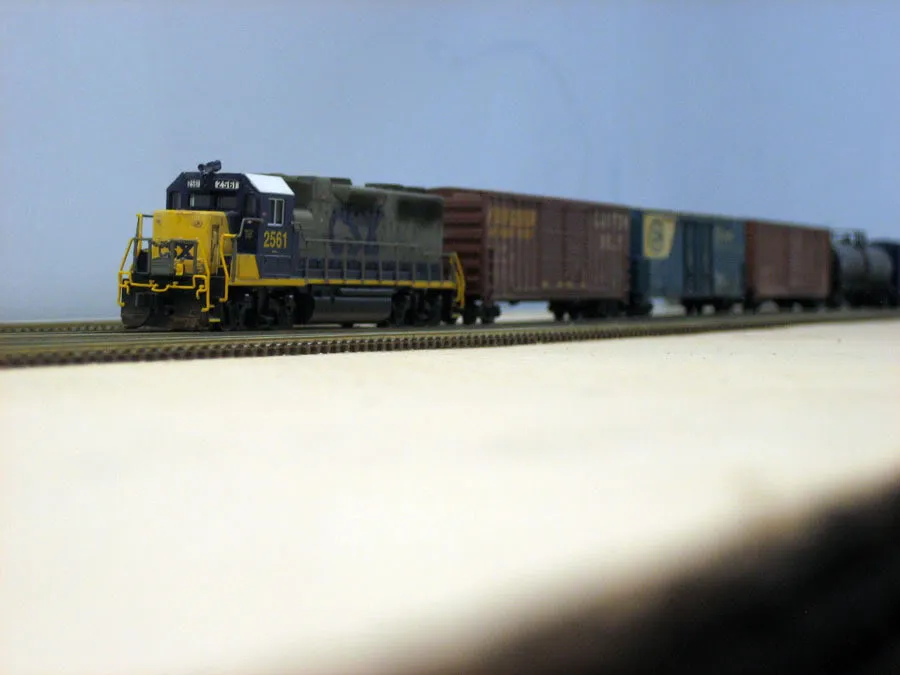
Miami Iron and Metal’s spur is on the left of this photo, cutting through the lot of Richard’s Marine.
As the spur curves away from the river into the produce district, the first industry is Sungas, a propane dealer.
A shot of 2561 from the Sungas lot.

One of the more tracked areas of the layout is between NW 22nd and NW 17th: the left is Miami Waste Paper, the kink in the spur is a truncated curve which lead to a parallel track one block south along the entire length of the existing spur. The spur to the right of the loco is Family & Son’s Produce, and the far right to the rear is Pan-American Frozen Food – one of the most frequent customers on the spur despite the building being the same size as a boxcar!
Two more industries are slightly further on, the spur on the left hosts Cuba Tropical (where the BNFE reefer is spotted) and Chicago Produce.
One of the physically largest customers is Trujillo & Sons, which has spots for dedicated vegetable oil tank cars and reefers alike. The spur to this business crosses NW 12th Av and needs to be switched in as few moves as possible.

At the end of the line there is a passing siding – often the CSX crew will switch the scrap metal industries at the start of the Downtown spur then head all the way here and shuttle back and forth with only one or two cars in tow to each industry to be switched, to avoid blocking the roads for too long in this busy part of town.
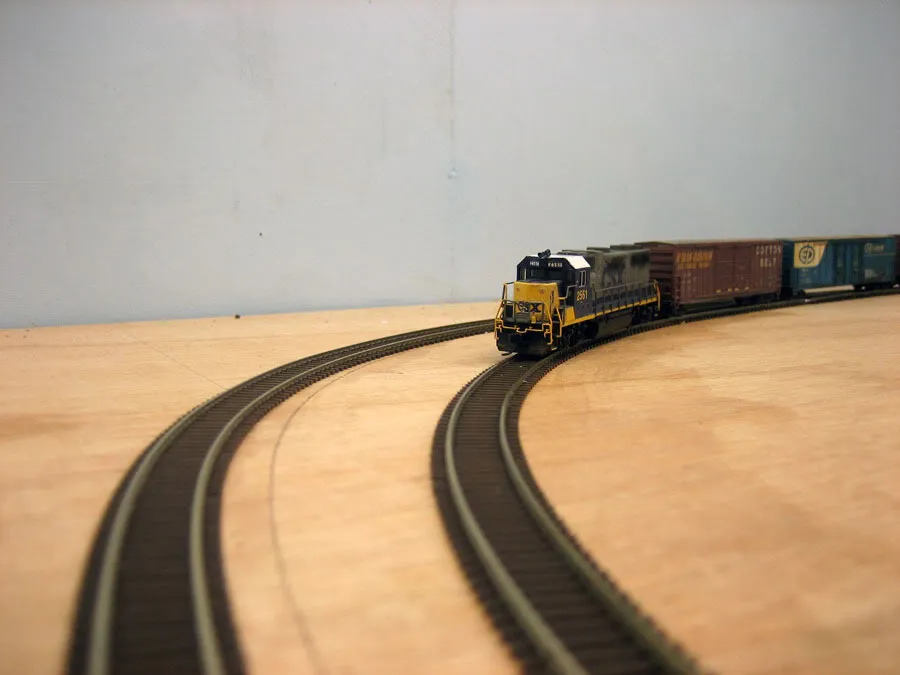
At the very end of the spur is the switchback lead, we are taking a shot from the forecourt of one of the half-dozen pallet businesses lining this part of the spur.
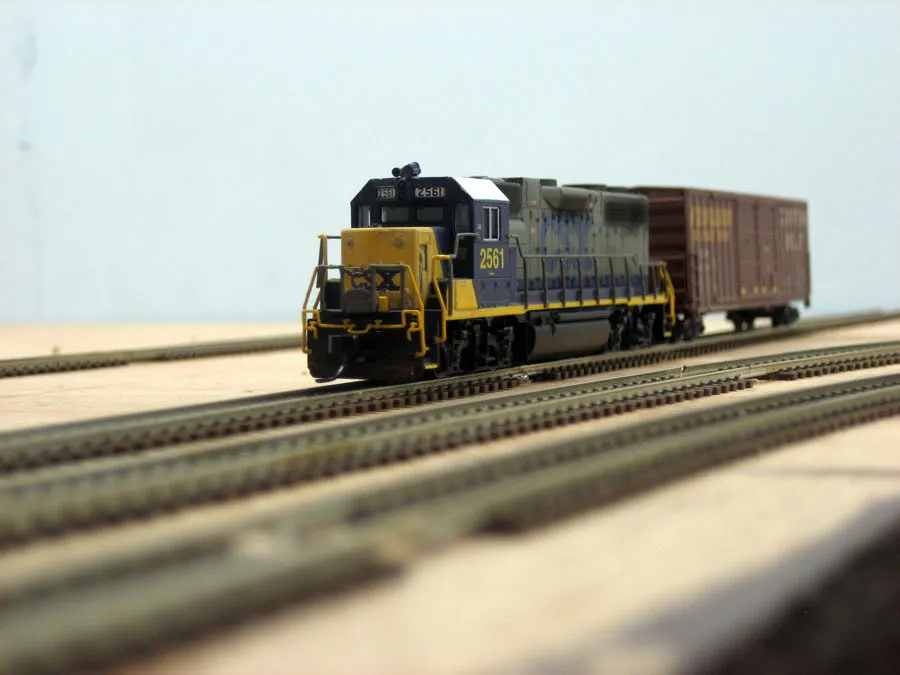
The switchback runs parallel to the runaround siding, hosting Florida Bottling (another frequent customer), A1 Foods and the forecourt of Miami Produce (pictured). There are several team-track spots in thise area of the downtown spur.
Positives:
Because the areas of operation are spread out so much there’s a real sense of going somewhere, which wasn’t present on PSF. The Atlas Code 55 used throughout was far superior to the Peco Code 55 in looks and performance, especially the #10 used on the mainline. Fully authentic operation and layout meant there was a great sense of satisfaction without compromise.
Negatives:
Unfortunately up-to-the-minute CSX just didn’t ring my bell. I worked under the impression that because I wasn’t a fan of CSX or even the modern era it would further enhance the authenticity. However, this extreme operations-based approach made it rather clinical and although I enjoyed the mechanics, there was no flair to hold my interest.
Lessons Learnt:
- Distributed switching is a great way to fill any space, assuming you can find a suitable prototype.
- The chosen prototype needs to interest you.
- Good trackwork helps keep the suspension of disbelief.
- Operations are a great framework but can’t stand entirely alone.
 Interlocking
You must be logged in to post a comment.