Following Terry Gough’s build articles from an ancient Railway Modeller, I went about chopping up some Tri-ang clerestory coaches to an approximation of those built by Billinton. It required a good deal of surgery!

Somewhat anachronistically these are all coaches without duckets, but that’s a compromise I’m willing to make in order to get stock on the rails.
In addition to splicing together passenger and brake compartments to create the correct layout, it also required the complete scratchbuilding of the ends and underframe details and trussing in styrene:
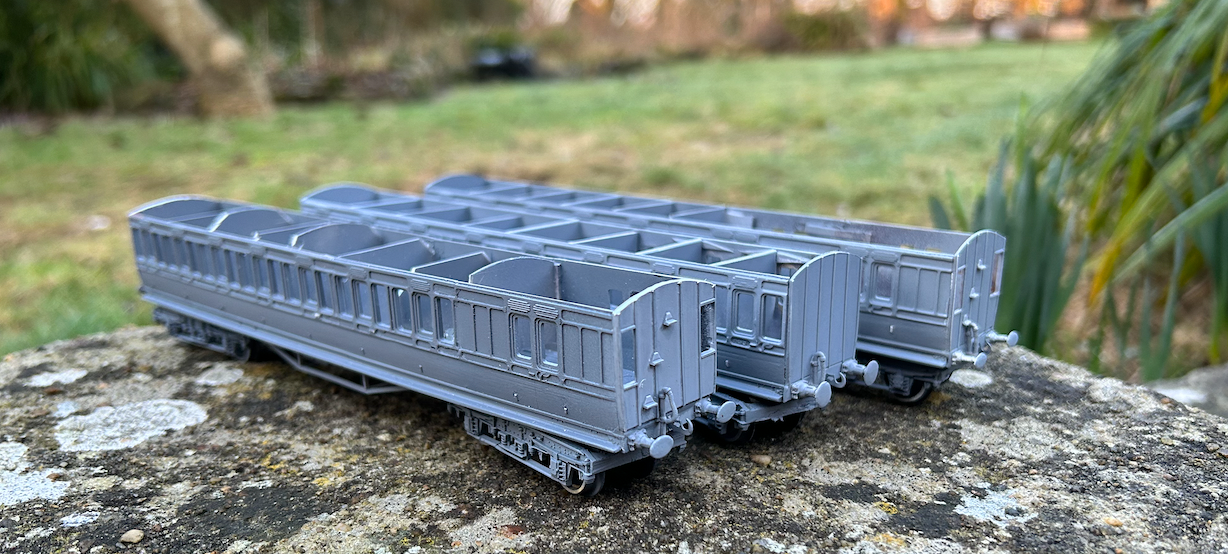
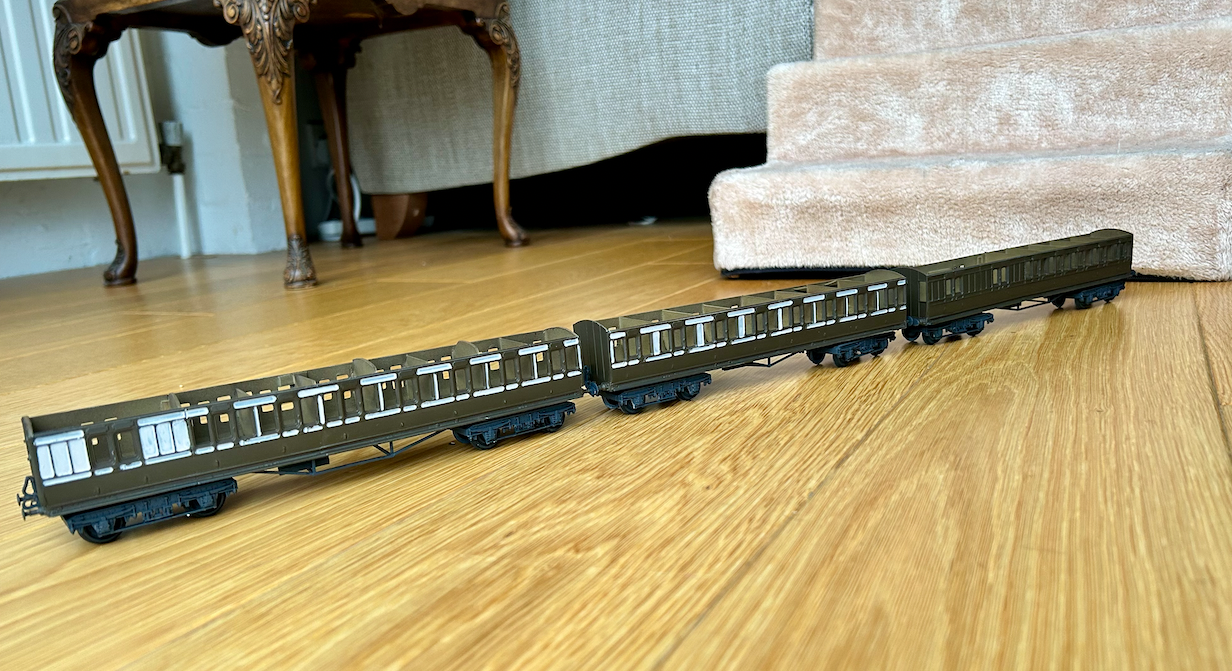
Frustrated by my seeming inability to form roof profiles from styrene or brass sheet, I modelled them in 3D and had them printed by a firm on the internet. This success drove me to purchase my own filament and resin printers in due course.
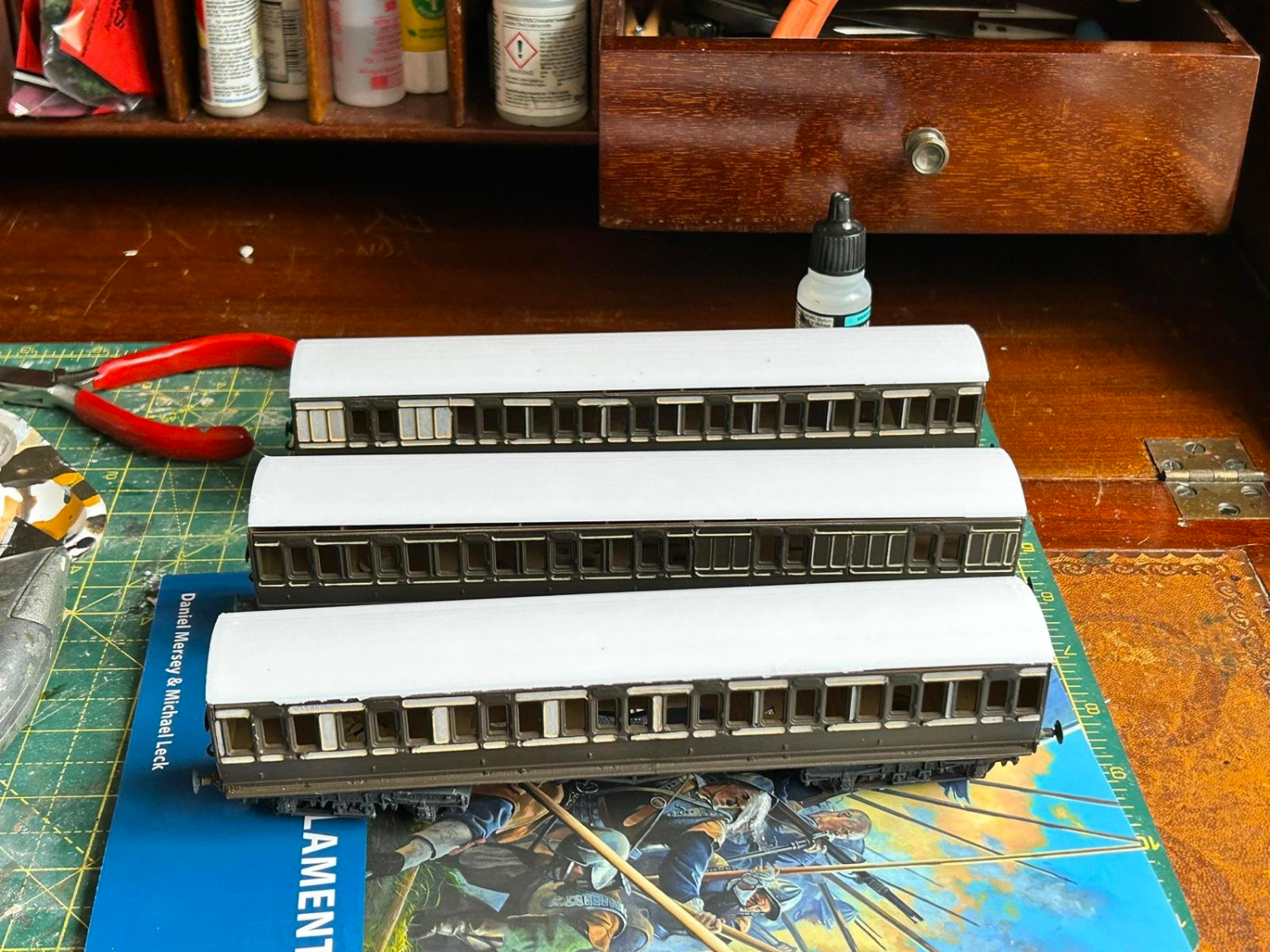
The prototypes selected were, from top to bottom, as follows:
- Billinton D-/193 7-Compartment Slip Brake 3rd (in Terry’s article as ‘Brake Third’) as No 89. The Slip Brake Third was also electrically lit, with the three smoking compartments (and thus ventilators) nearest the guard.
- Billinton D129/199 5-Compartment Brake 2nd Luggage (described by Terry as ‘Brake with Luggage’) No 155. This carriage diagram was built in two batches, my model depicts the first electrically lit version, with a single havoc ventilator over the end smoking compartment.
- Marsh D61/86 8-Compartment 1st-2nd Composite (comprising half each of a Tri-ang brake-third and a Tri-ang composite, as suggested by Mr. E. Gates) depicted as No. 567. The 1st-2nd Composite was built in two batches, the first being gas lit – so for the sake of variety I have gone for that here with a single gas lamp per compartment.
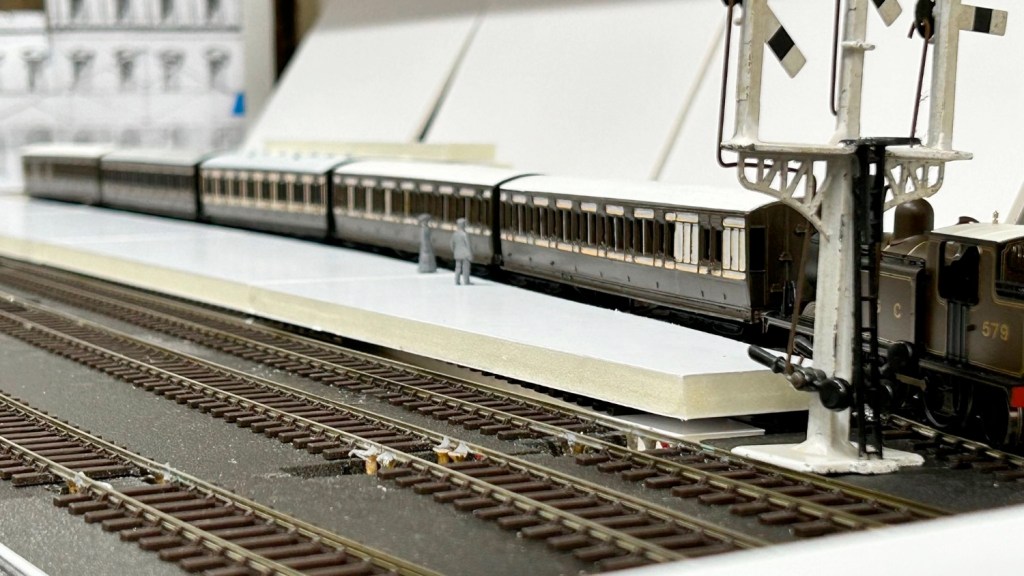
The completed rake is shown here:

 Interlocking
You must be logged in to post a comment.