Wiring
My strategy for wiring is quite simple – other than an expansion gap fitted into the middle of the throat board, all the track is soldered together. Brass screws driven in to the baseboard end used to locate and secure the rail ends across joins.

Droppers were soldered to each formation and these fed into the bus wires running below using terminal blocks and consolidated into a bus.
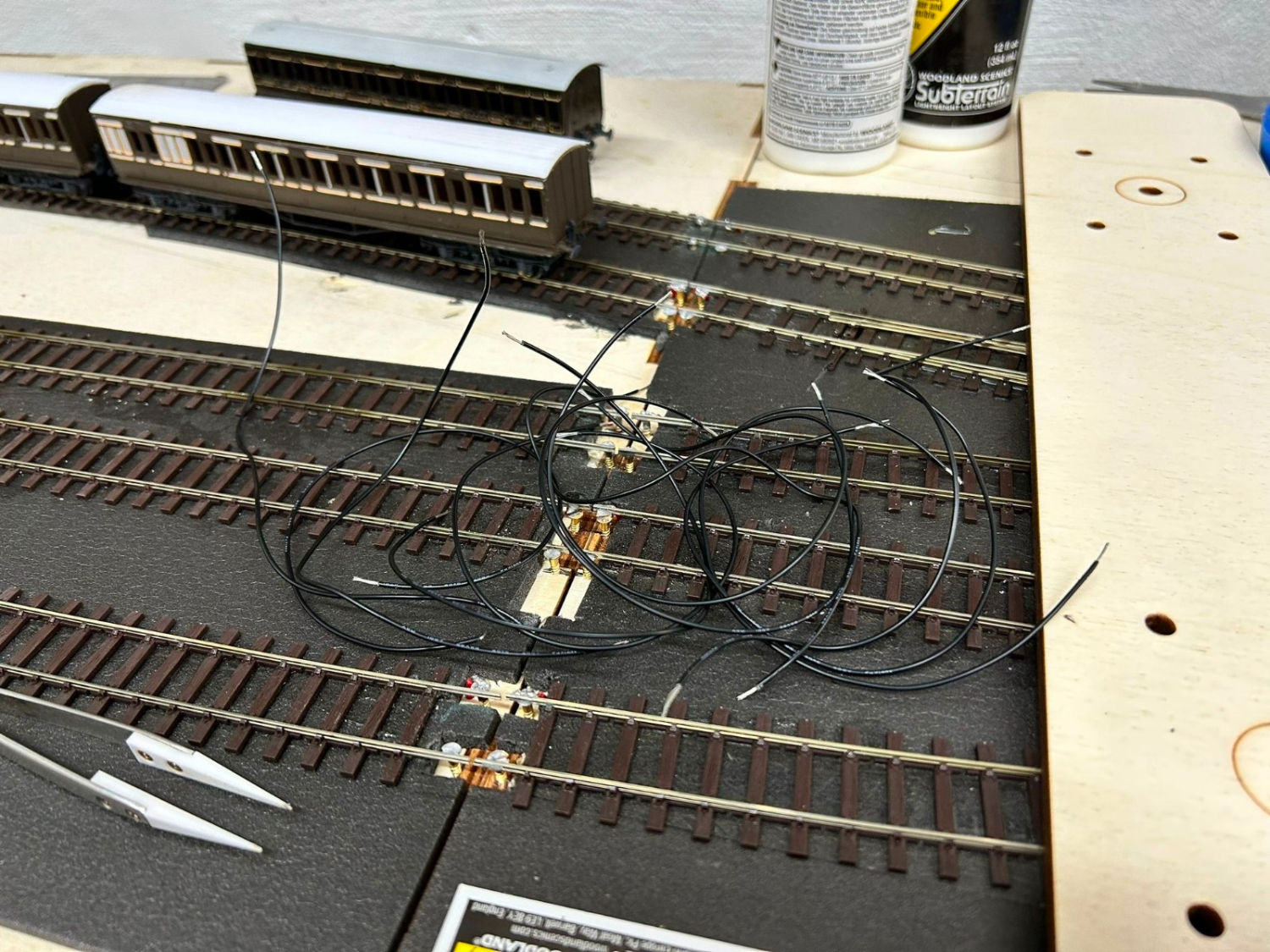
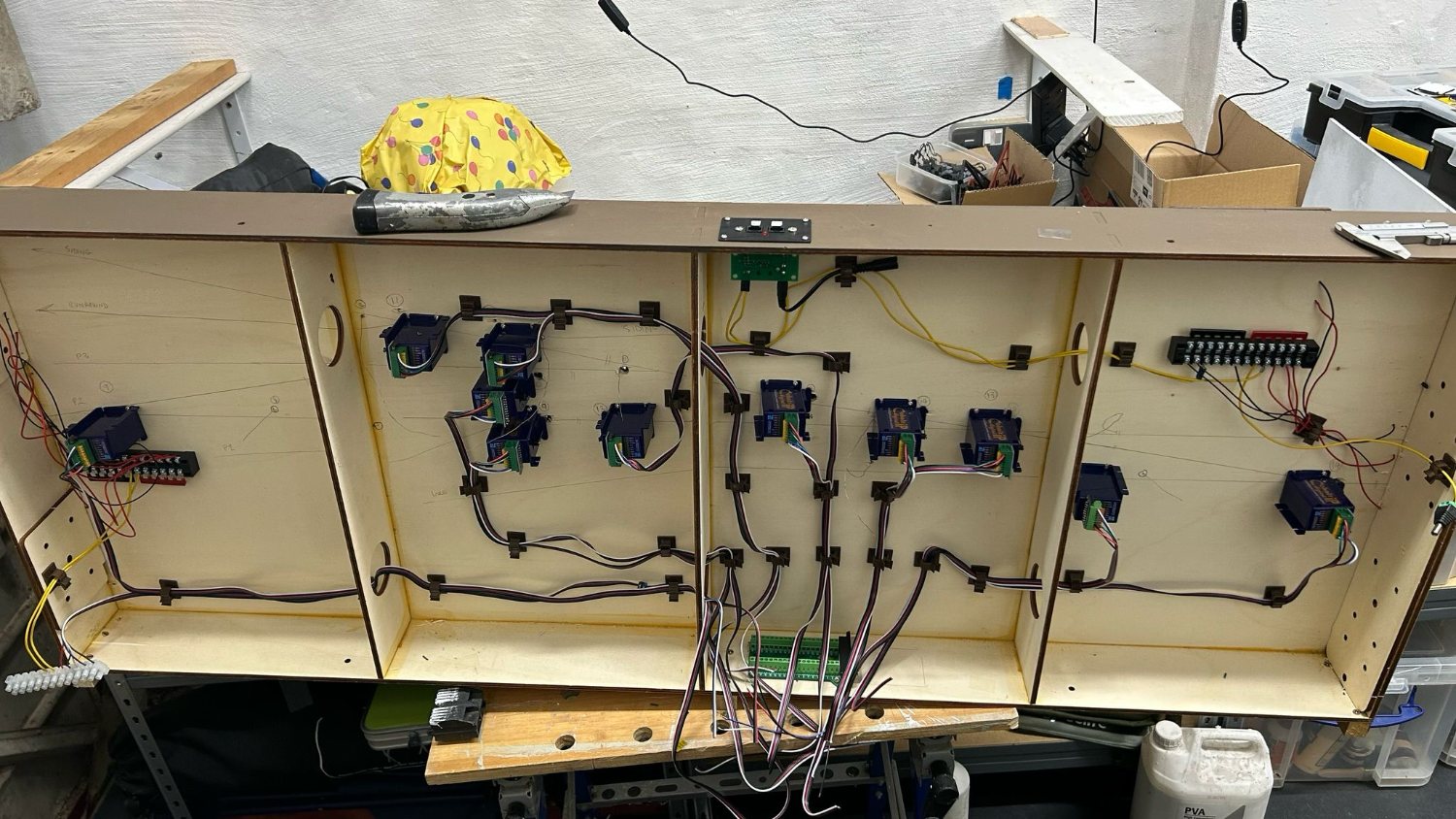
An unfinished shot of the underside of the throat board shows the terminal blocks, though in this photograph if I have not yet run bus cables between the two sets of blocks:
Traverser Board
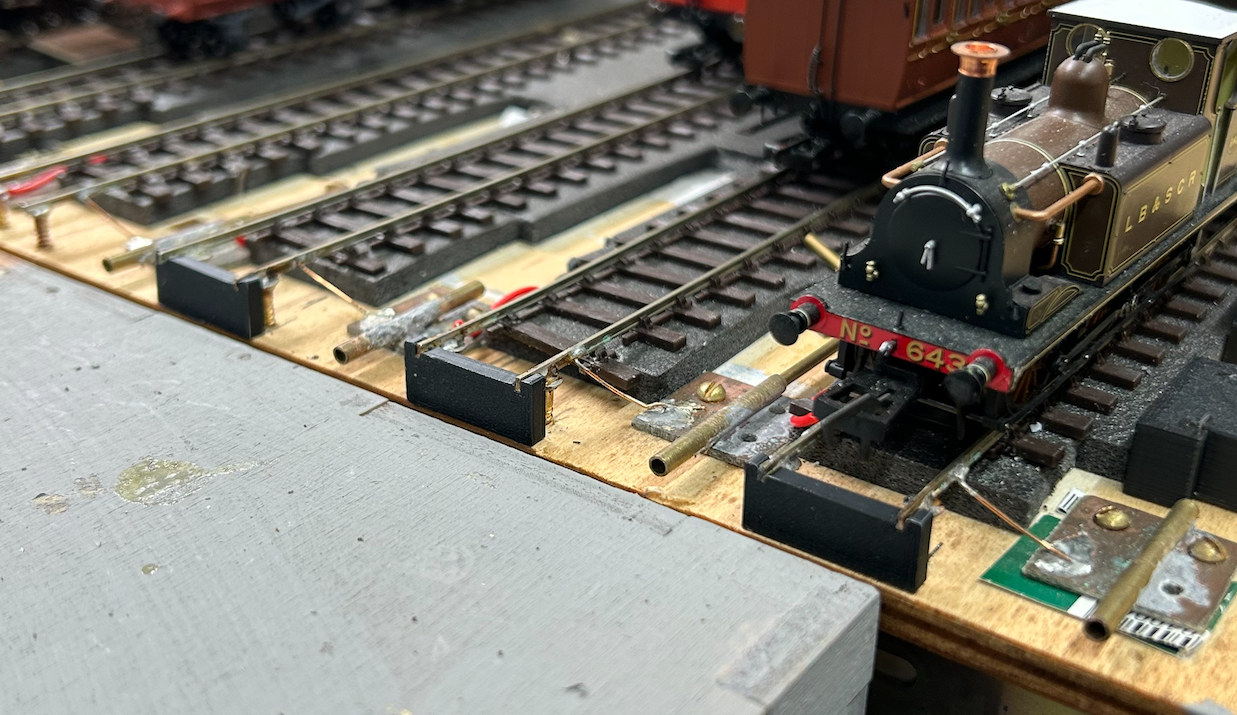
This was not perfectly executed, particularly on the traverser-board which has a built-in gap of approximately 2.5mm between the traverser surface and the adjoining boards. Presumably this is intended to forestall any physical clash of rails, but it does result in a somewhat bumpy ride.
I used 3D printed jig/platforms to ensure the ends of my track are aligned correctly, which seems to have evened out the most egregious of vertical misalignment:
Inevitability of DCC
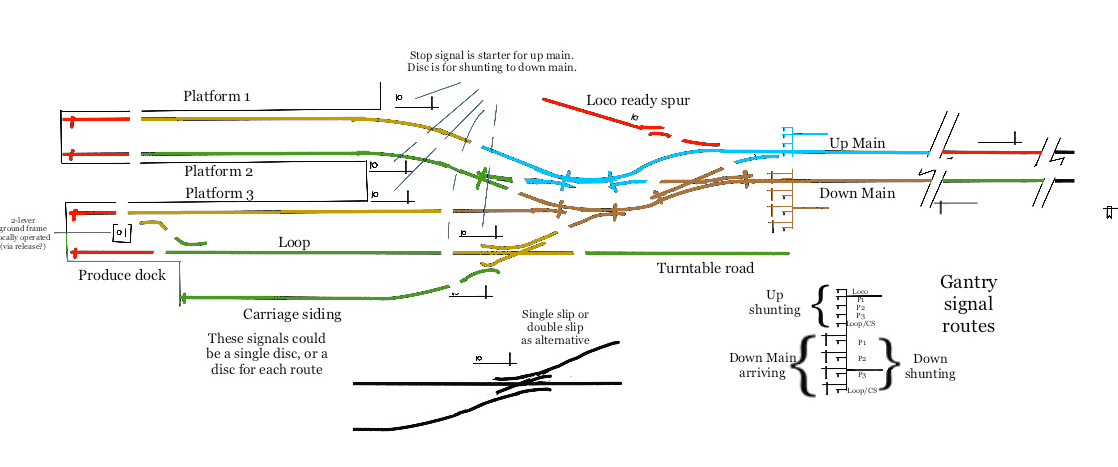
My original plan was to use DC control, with levers to control both signals and DC block sections, and I had designed and prototyped the switching to manage it.
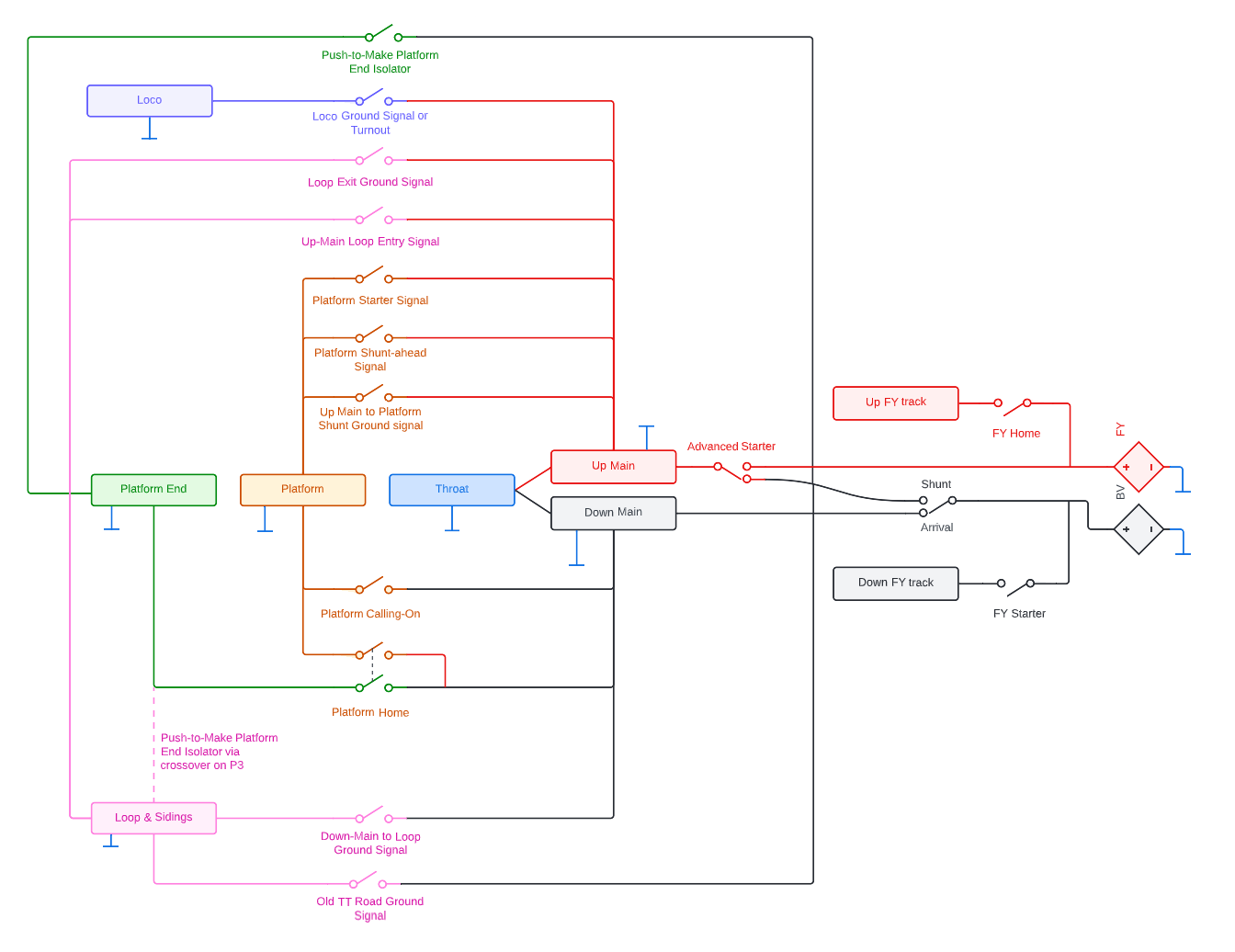
After a period of reflection I realise the complexity of this option did not reflect any potential operational interest gained or cost-saved over DCC.
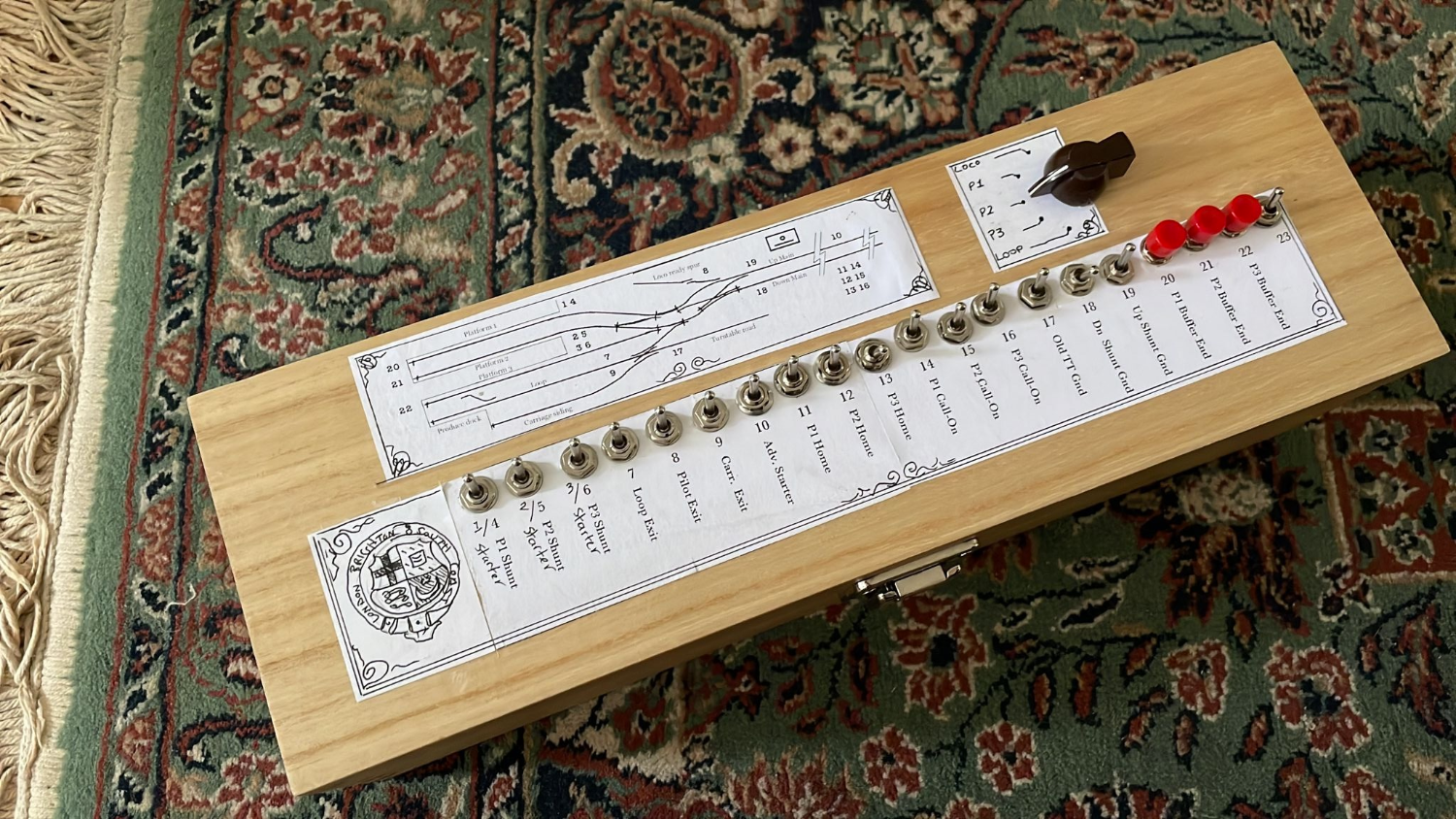
This was highlighted in the challenges of super slow-speed DC running in the non-hermetically sealed environment of the garage, and because the Peco Unifrog points didn’t support power routing without additional modification.
DCC System
I am currently using an NCE PowerCab Pro:
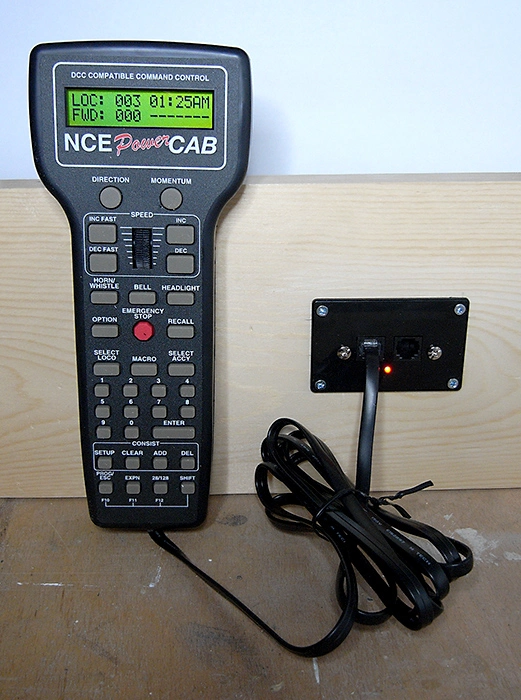
This is of course a fairly bog standard piece of kit and I would like in due course to build my own controller (maybe using MERG parts?) that is more in keeping with the aesthetic of the layout – a big brass lever on varnished mahogany? For the future!
As for DCC chips, I’m not yet convinced there is significant difference between brands to the degree that is evangelised particularly with the rebranding of proprietary decoders by vendors – as a result my loco fleet is simply equipped with whatever came to hand, and so far (!) no problems. These include Bachmann/ESU, Zimo and Dapol/Gaugemaster/LaisDCC.
Sound
I have chosen to not include on-board sound for my locomotive and rolling stock at this point – it may be something I retro-fit, but given the significant cost and limited realism I do not foresee it.
I would however like to include static sound modules on the layout – particularly train whistles with a push-button. Something to think about!
 Interlocking
You must be logged in to post a comment.