I have always been a strong advocate of finescale track standards and have dallied in 2mmFS, 3mmFM, 4mm EM and P4, and S7 – making track is both therapeautic and enjoyable for me.
Scale choice aside, in 4mm I felt a natural affinity for EM (and in particular EM-SF) but felt that in order to lay track and subsequently populate a large (for me!) layout at a time when I am with a young family and a full-time job, that I would need to compromise and leverage ready-to-run components in order to make it achievable.
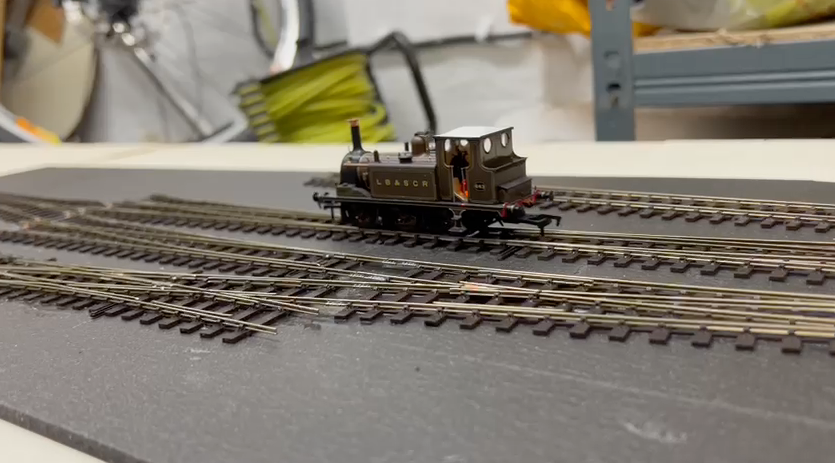
Happily, Peco’s Bullhead range met my needs for this layout. There are some small compromises in addition to the track gauge which I would not need to accept if I were hand-building the layout, the most egregious of which is an effective 2ft radius curve on the single- and double-slip turnouts which are integral to the throat design.
Track Painting
Inspired by Mikkel’s Farthing layouts and their Edwardian glamour, I took his recipe for track. He shares the affinity I have with Vallejo and uses VMC German Camo Dark Brown / VAL Dark Brown (they are the same tone, but named differently depending on whether it’s the Model Colour or Airbrush Line variant). I drybrushed this with a red leather/ivory mixture to bring out the texture, though as we will see the majority of this will end up being hidden.
Ballast
Ballasting is one of those stages where you are committing yourself to a track plan and the qualities (or lack thereof) of your track laying and as such it’s a point I’m always quite nervous about, beyond the tedium of the work itself. I did a small colour test using Peco Fine Brown and generic Chinchilla dust and found the latter to be a better texture, but the wrong colour – and so I have experimented with washes:

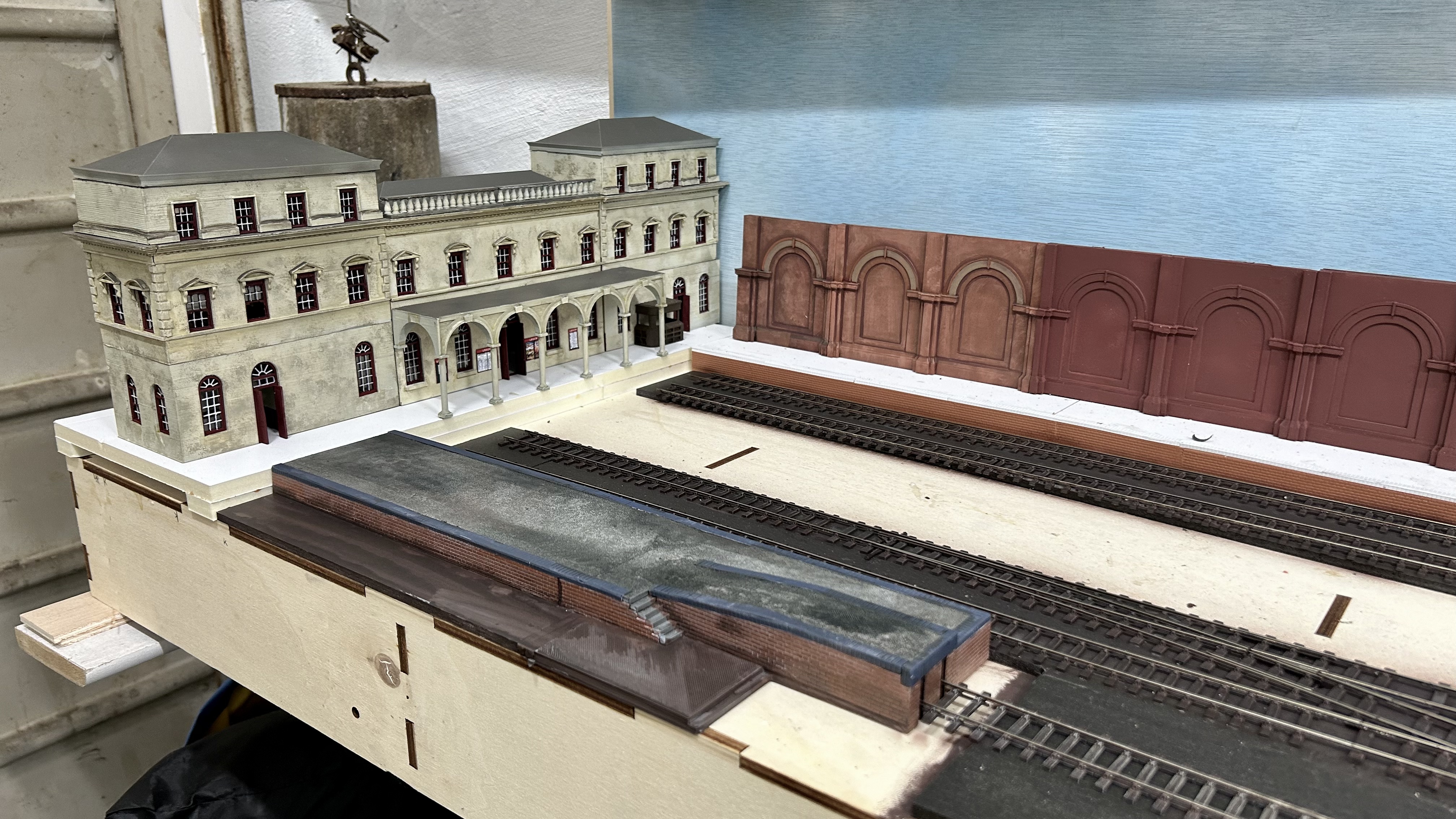
Up until the turn of the 20th century it was common practice to cover the sleepers with a thin layer of ballast, so track resembled two ribbons of rail threading their way through a station. On the far right you can see the practice of exposing sleeper pairs to establish correct drainage/etc.
A simple chestnut wash with the addition of a little brown here and there for variation seems yield the best combination of texture and colour. Mr. E Gates confirms that the majority of LBSCR ballast would have been shingle sourced from the Crumbles siding in Eastbourne, and I’m fairly pleased with this depiction.
Point Motors
In an ideal world this layout would have mechanically actuated turnouts with a physical interlocking system. In practice, that is a year long project by itself and not conducive to maintaining at least a notional forward progress on the layout. Additionally, the implementation of mechanical actuation complicates exhibition significantly, so as a result I have gone with IP Digital motors and electronic point switching.
Fiddle Yard
I decided to use a traverser fiddle yard for this layout, and in retrospect I wish I had the space for a traditional fan of sidings. Maybe that’s another thing which can come in due course – but for now it’s usable.
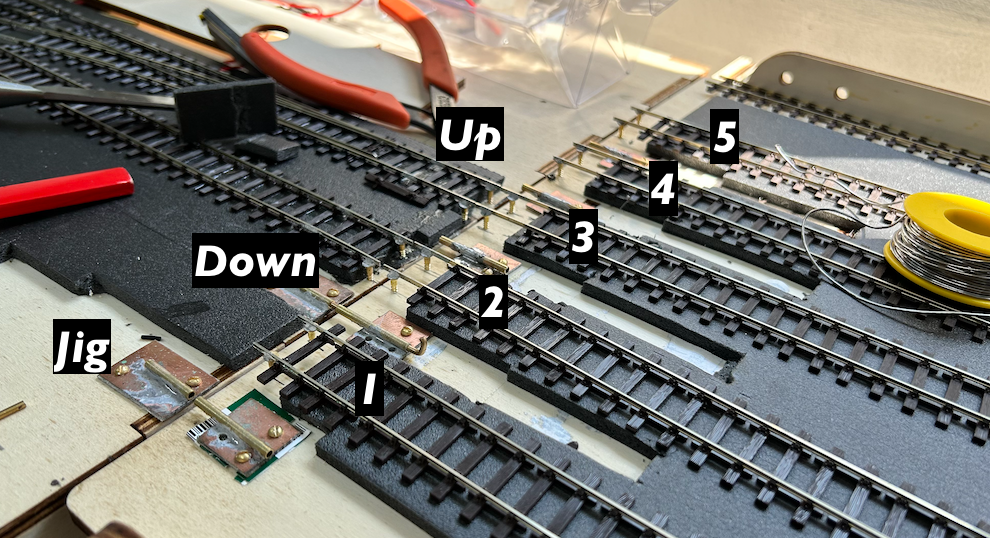
A simple pin-in-tube mechanism is used to lock the traverser in place, and this also conducts negative power to a given traverser track. This ensures that only aligned traverser tracks are energised and any locos which are accidentally selected cannot crash!
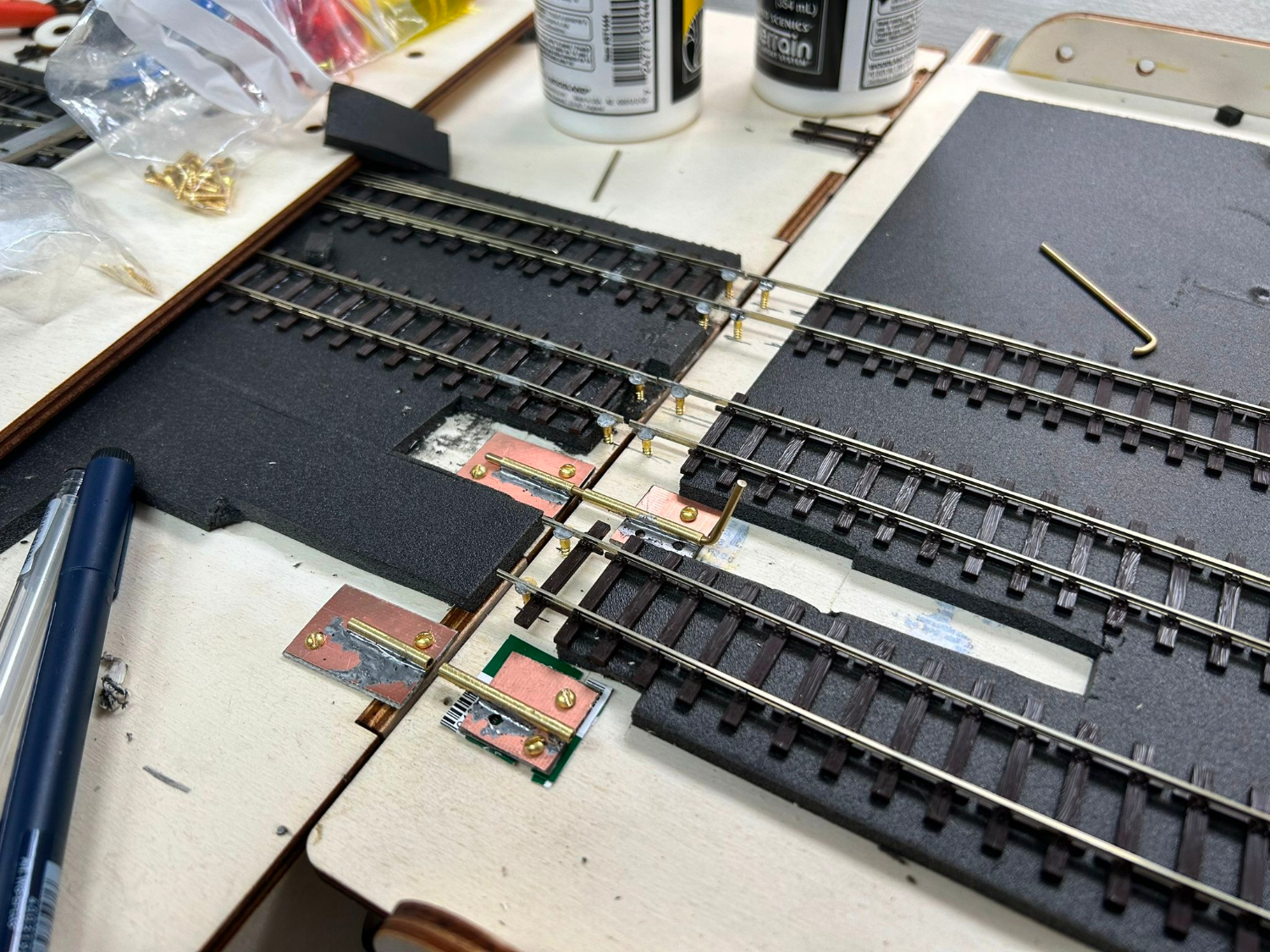
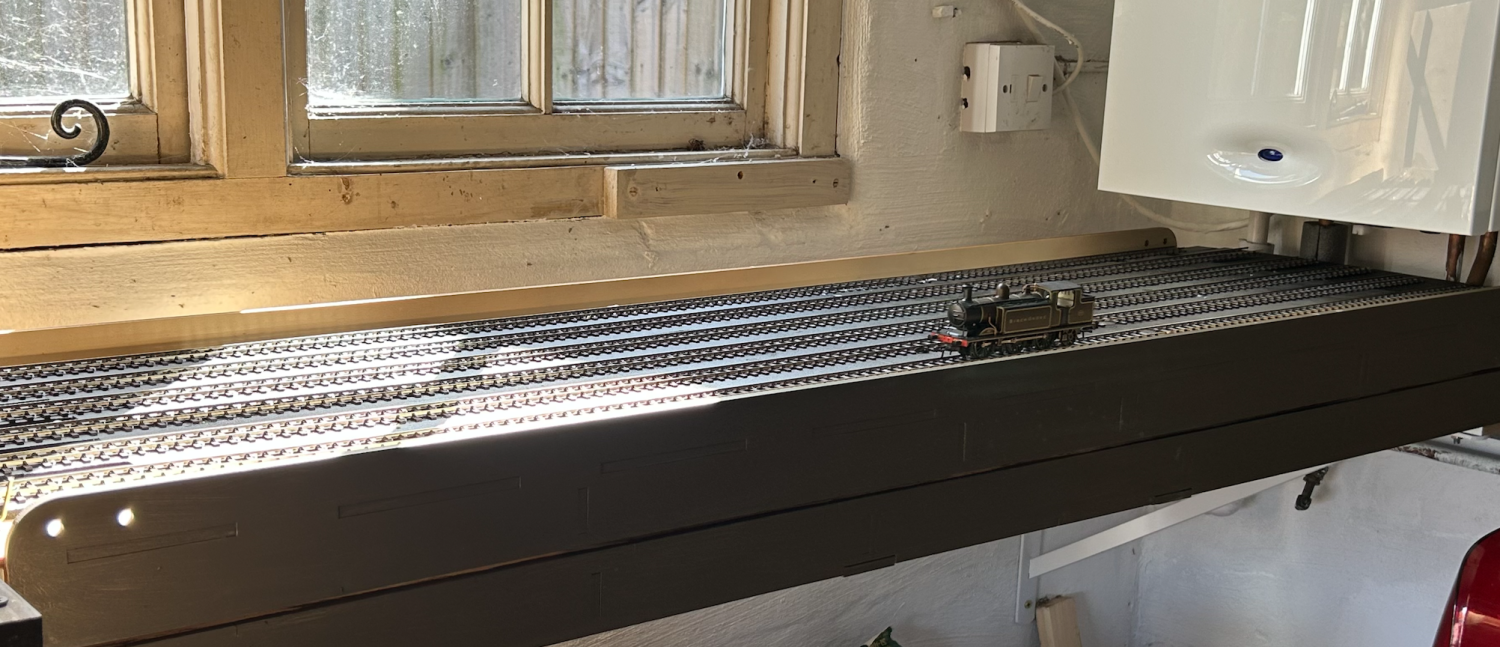
After some time, the traverser tracks were lengthened to their proper extent:
 Interlocking
You must be logged in to post a comment.