Essential Details
Hennock was the first time I managed to bring a layout to a point where it was substantially complete. It was built to 2mmFS standards (1:152) and depicts the halcyon days of a Great Western Railway Devon branch line.
Trackplan
The Track plan for the layout was based on one of the passing stations on the Culm Valley branch line – a passing loop on a single track branch, with one siding that has a cattle dock and another with hard standing and a crane.
Gallery
Under Construction:
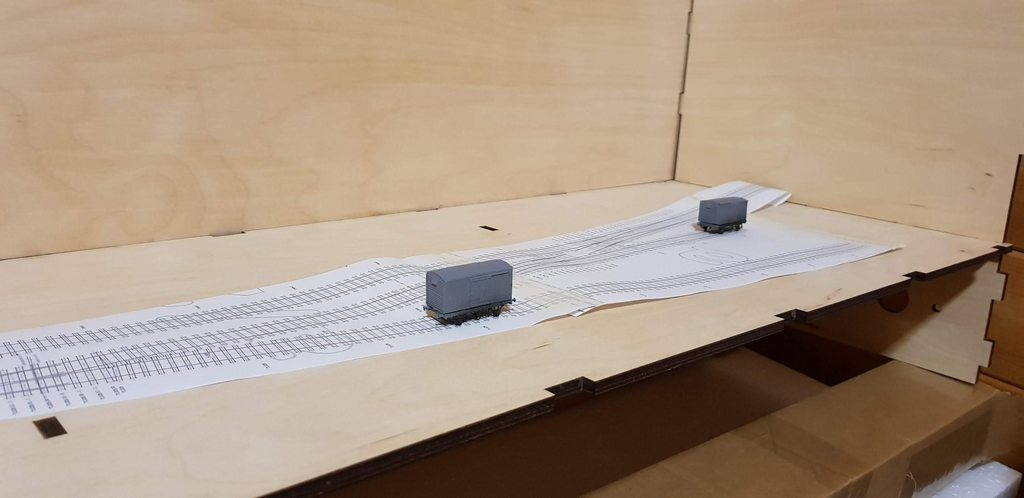

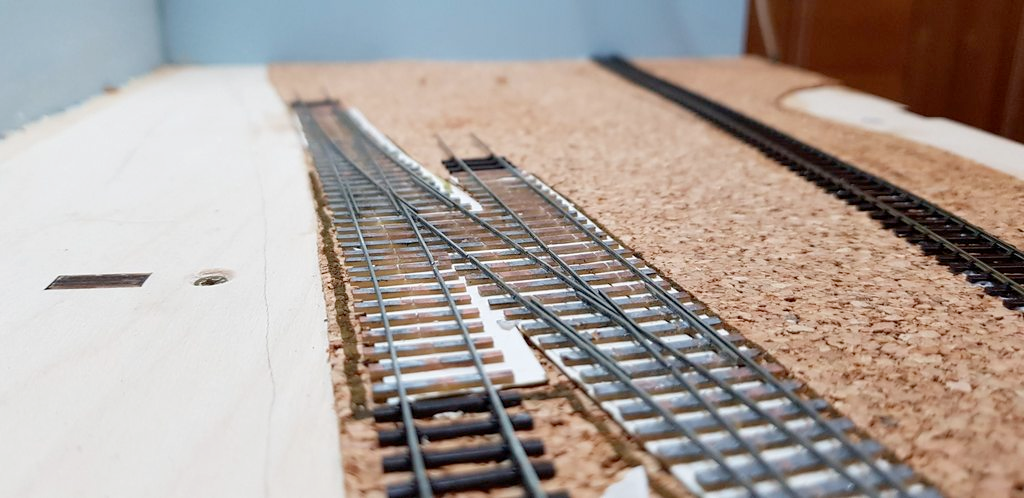
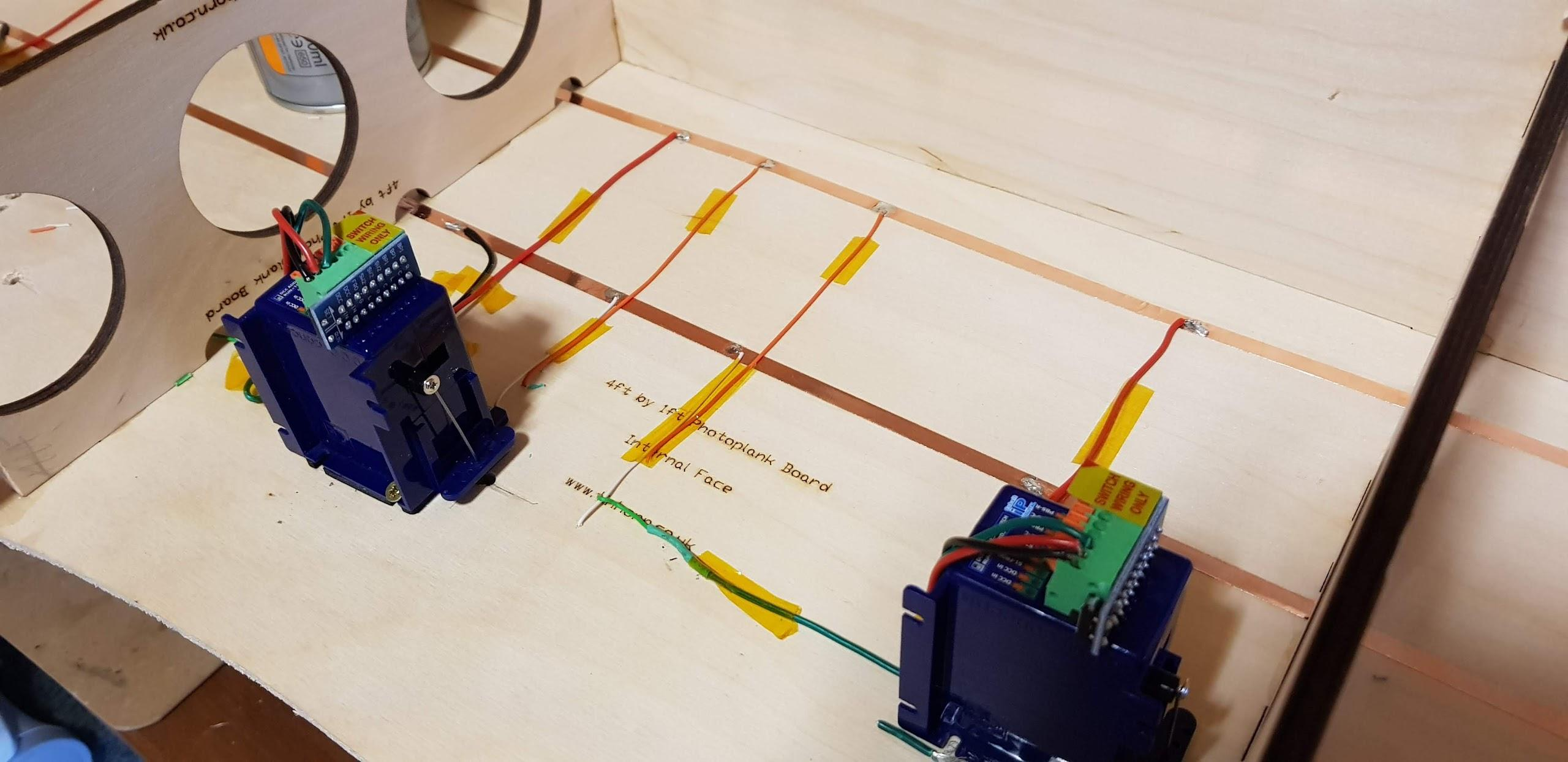
With the track laid, some stock was laid out to judge the visual effect
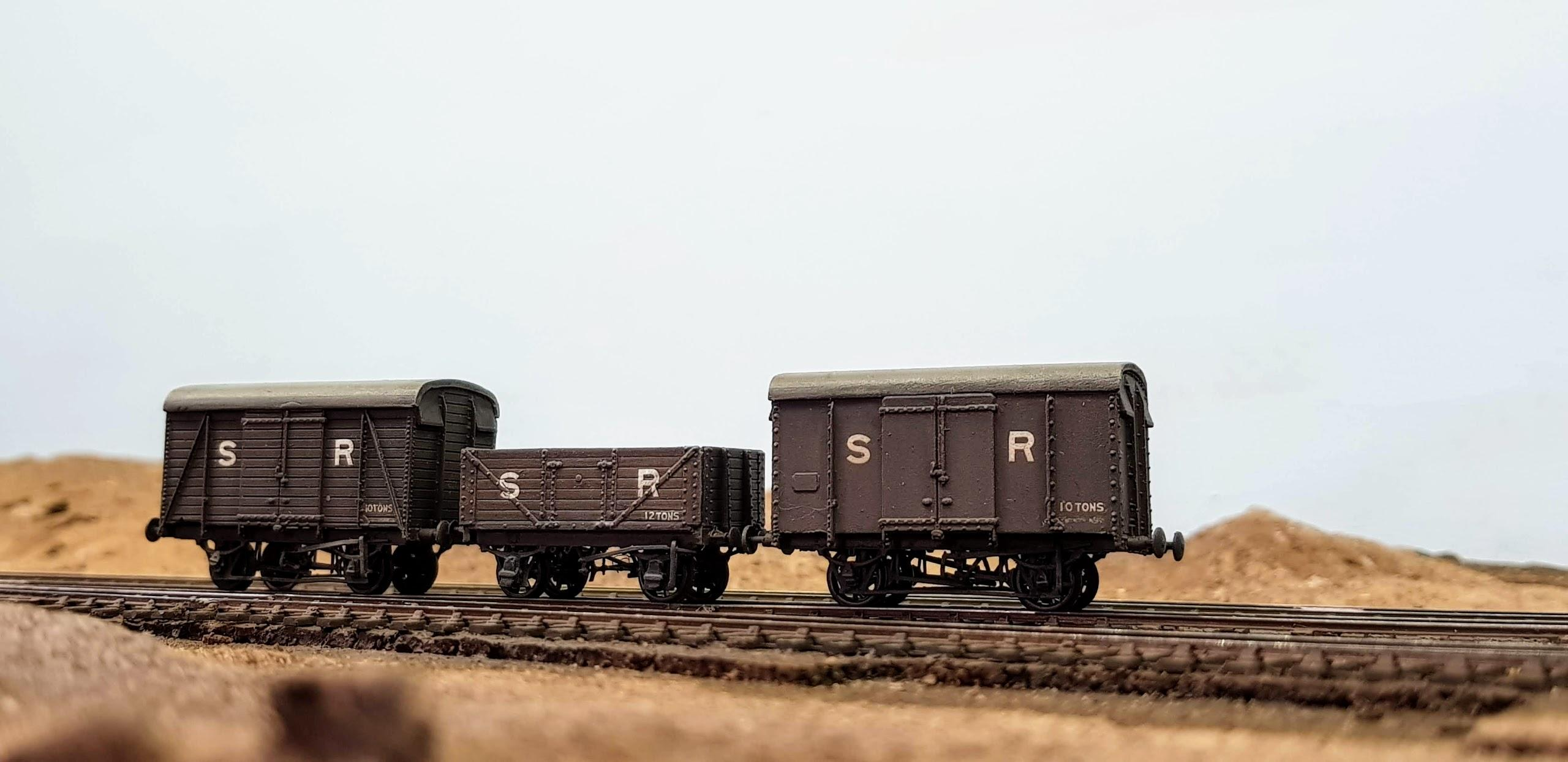
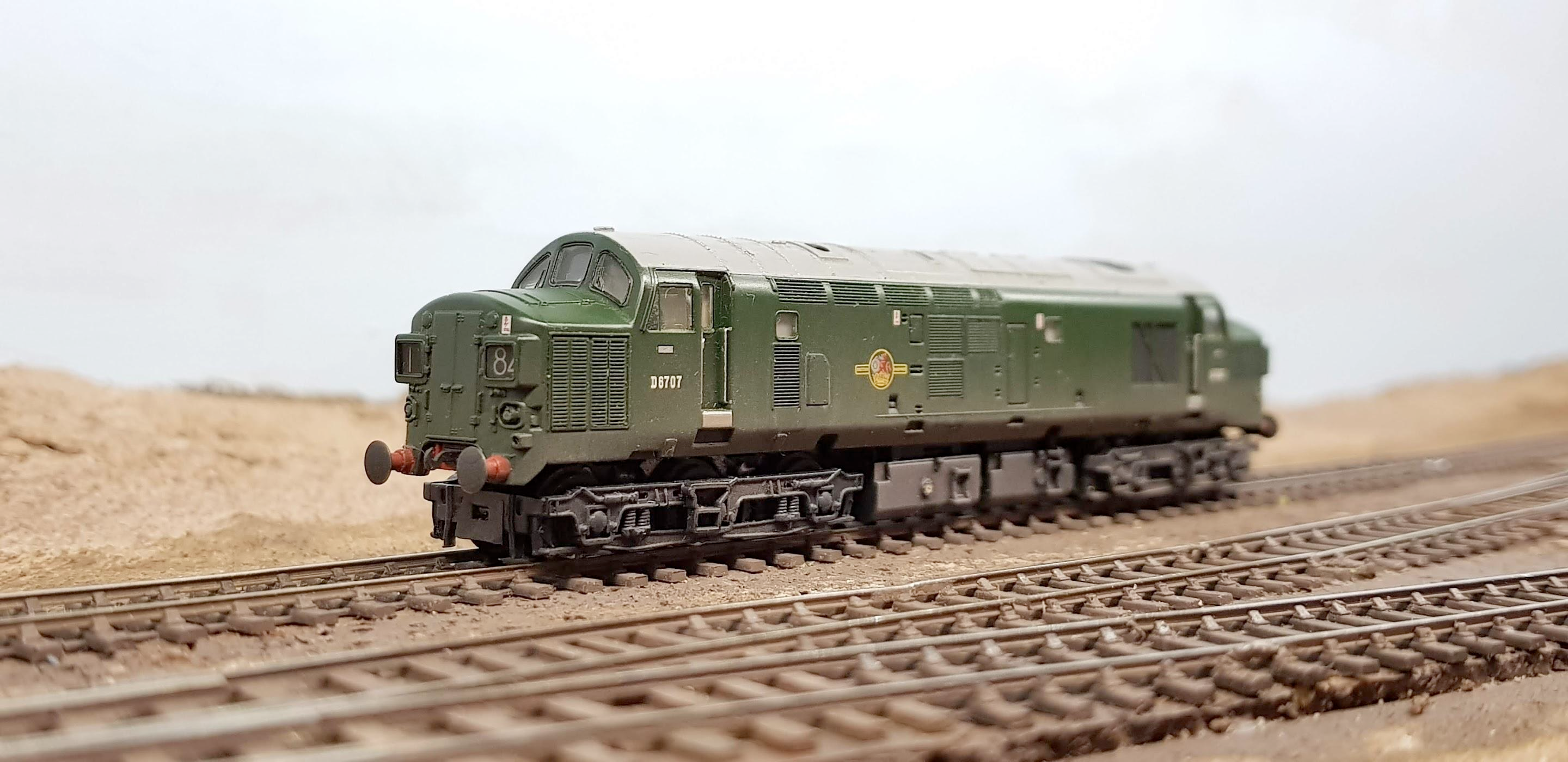
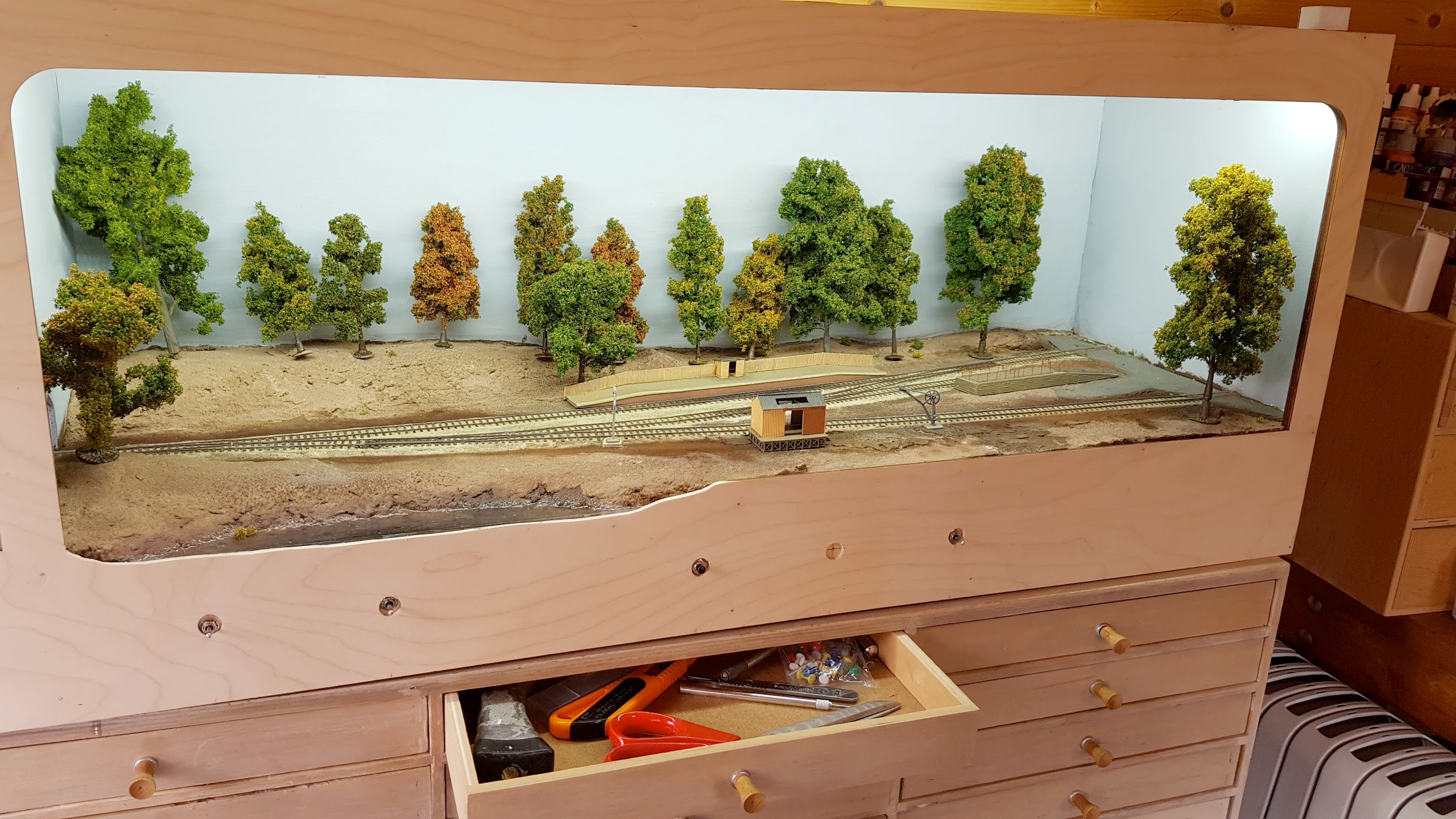


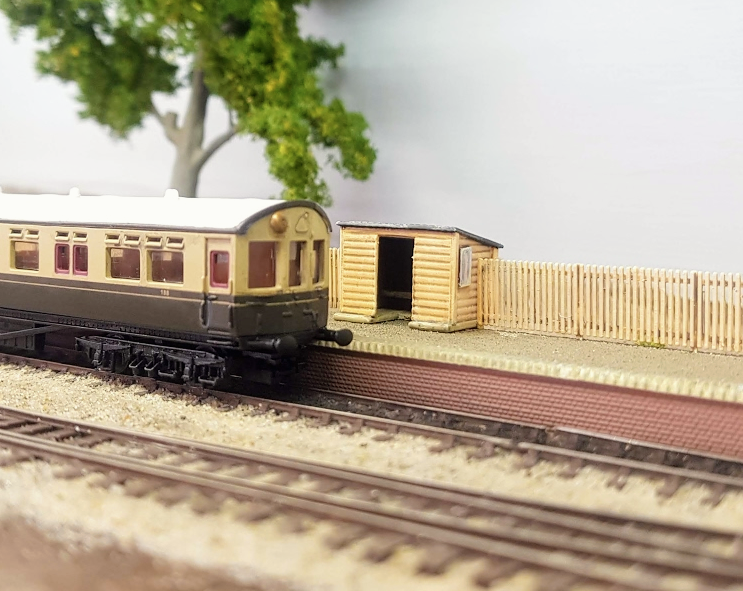
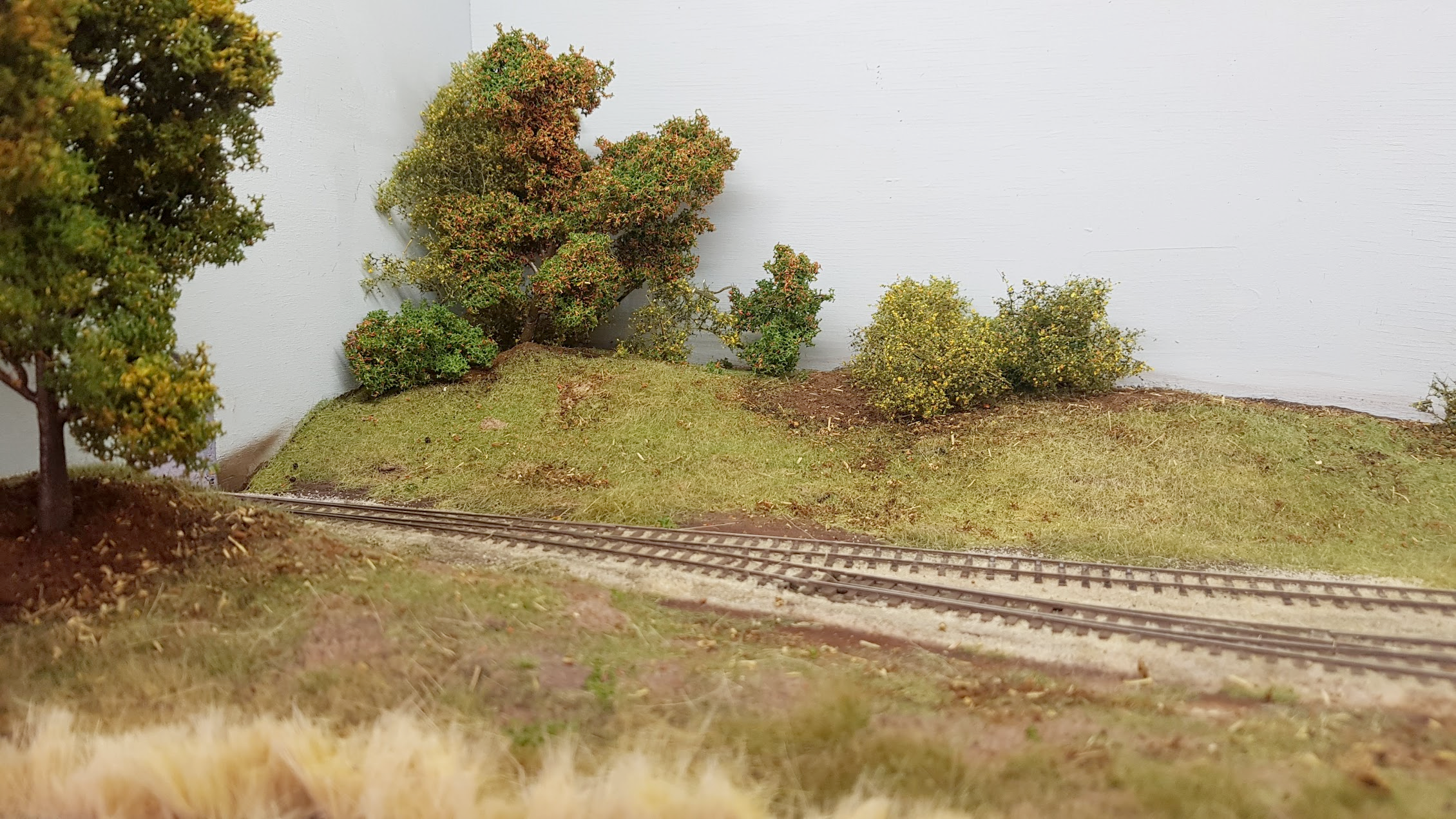
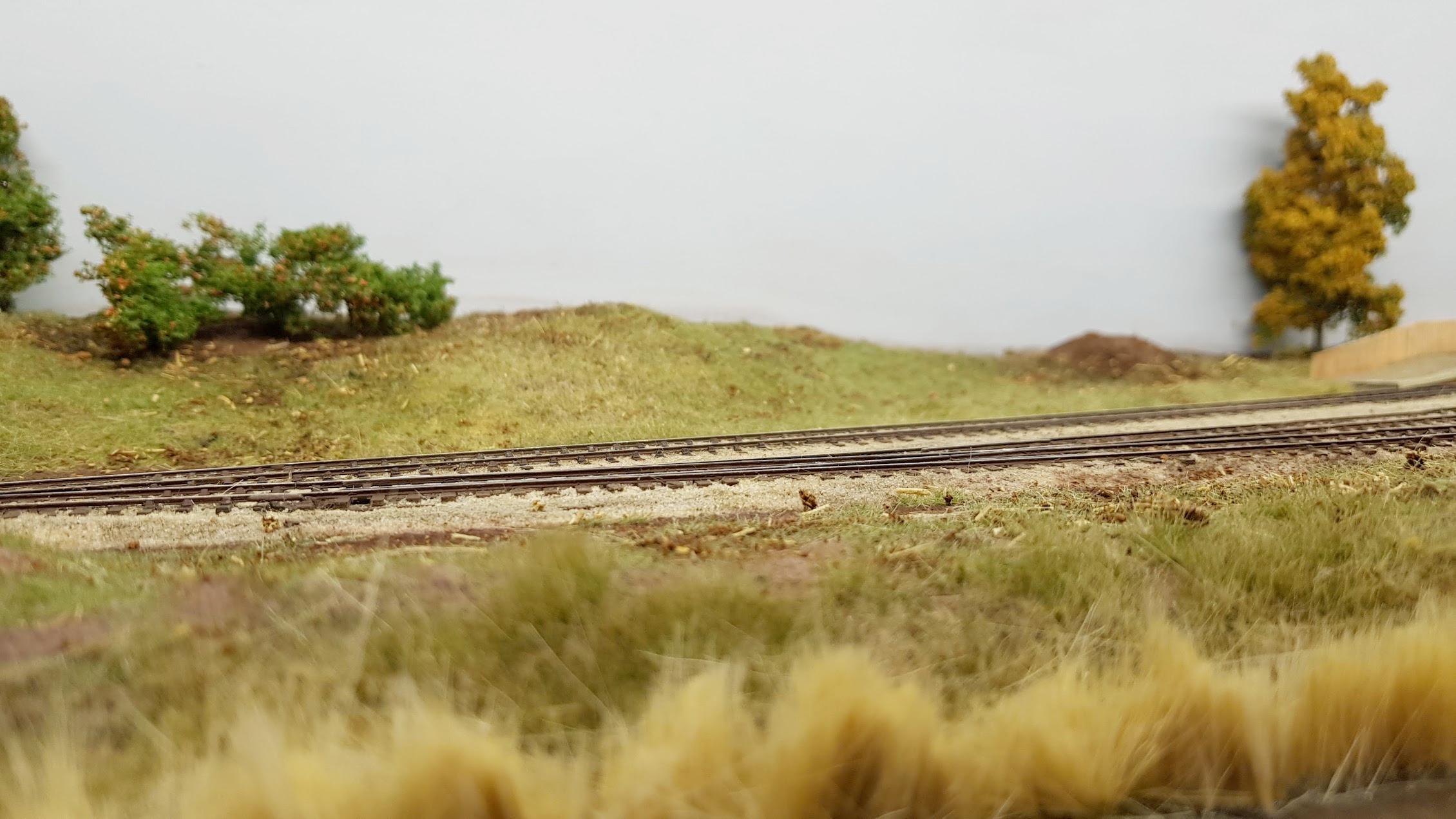
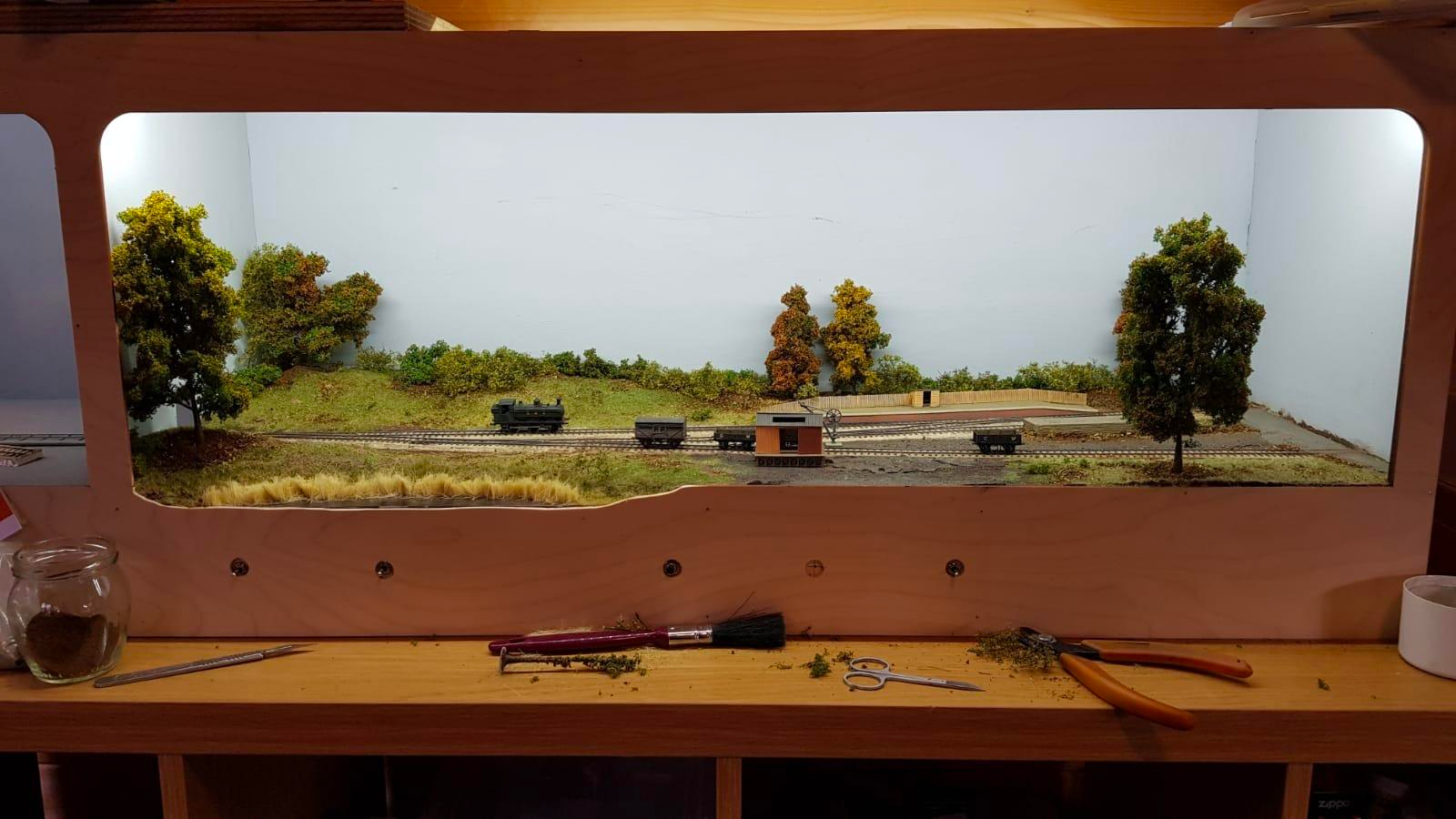
The layout was substantially complete at the point it was sold on:

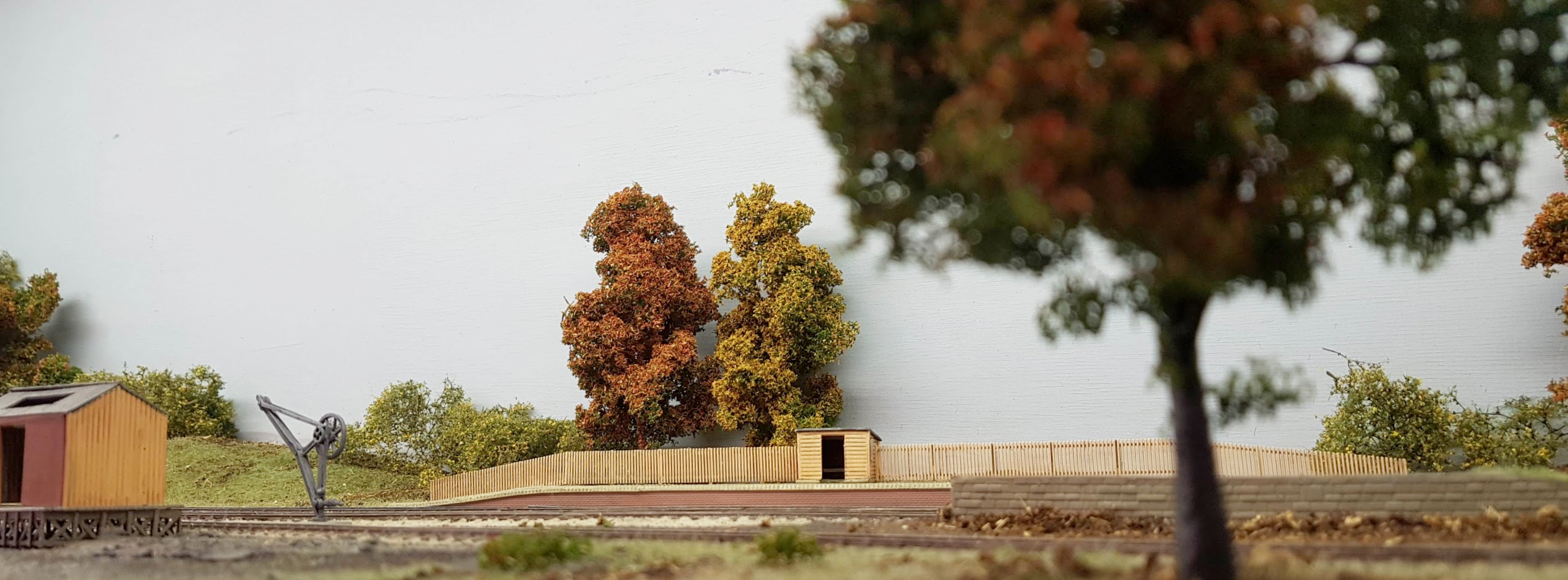
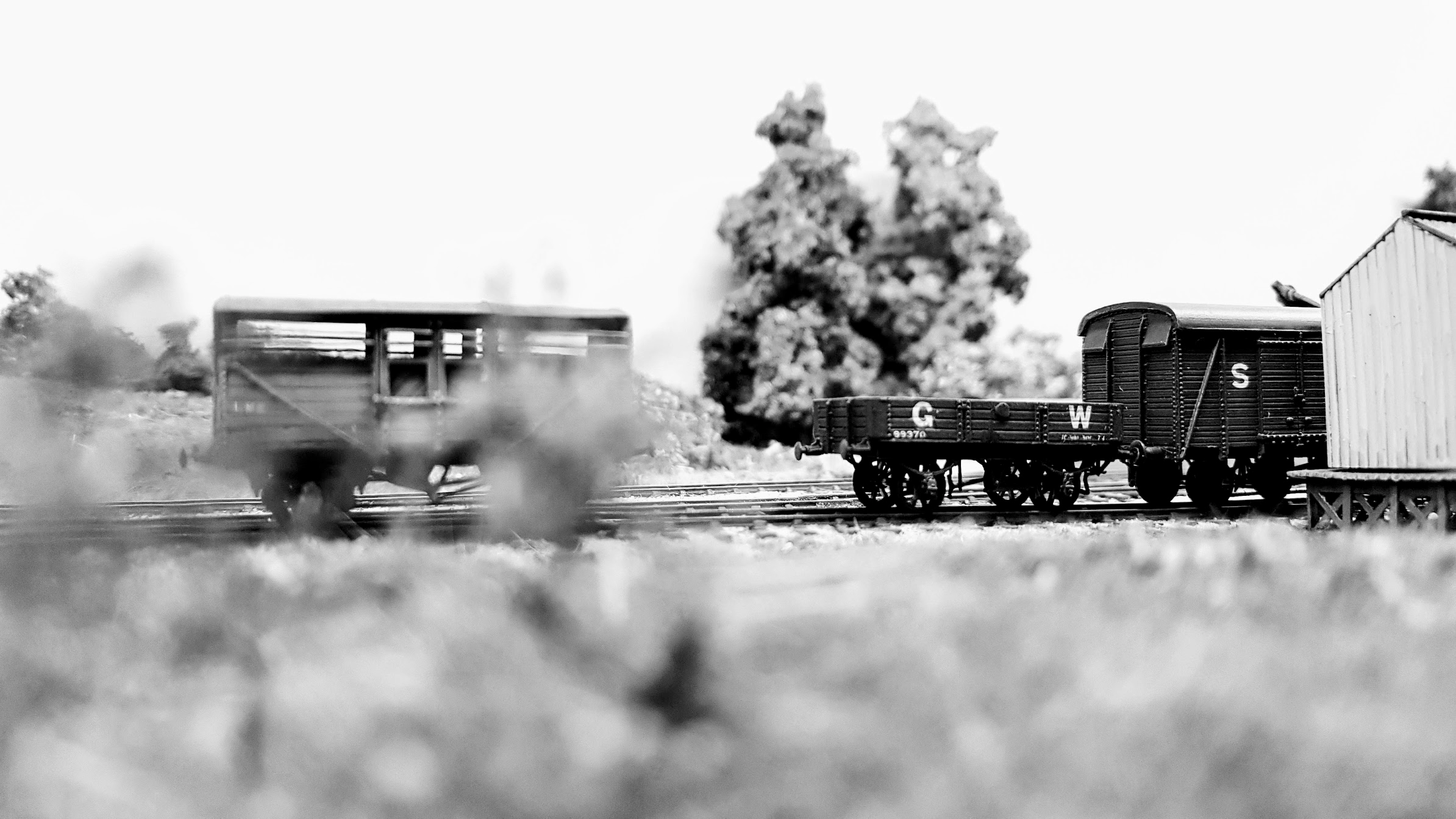
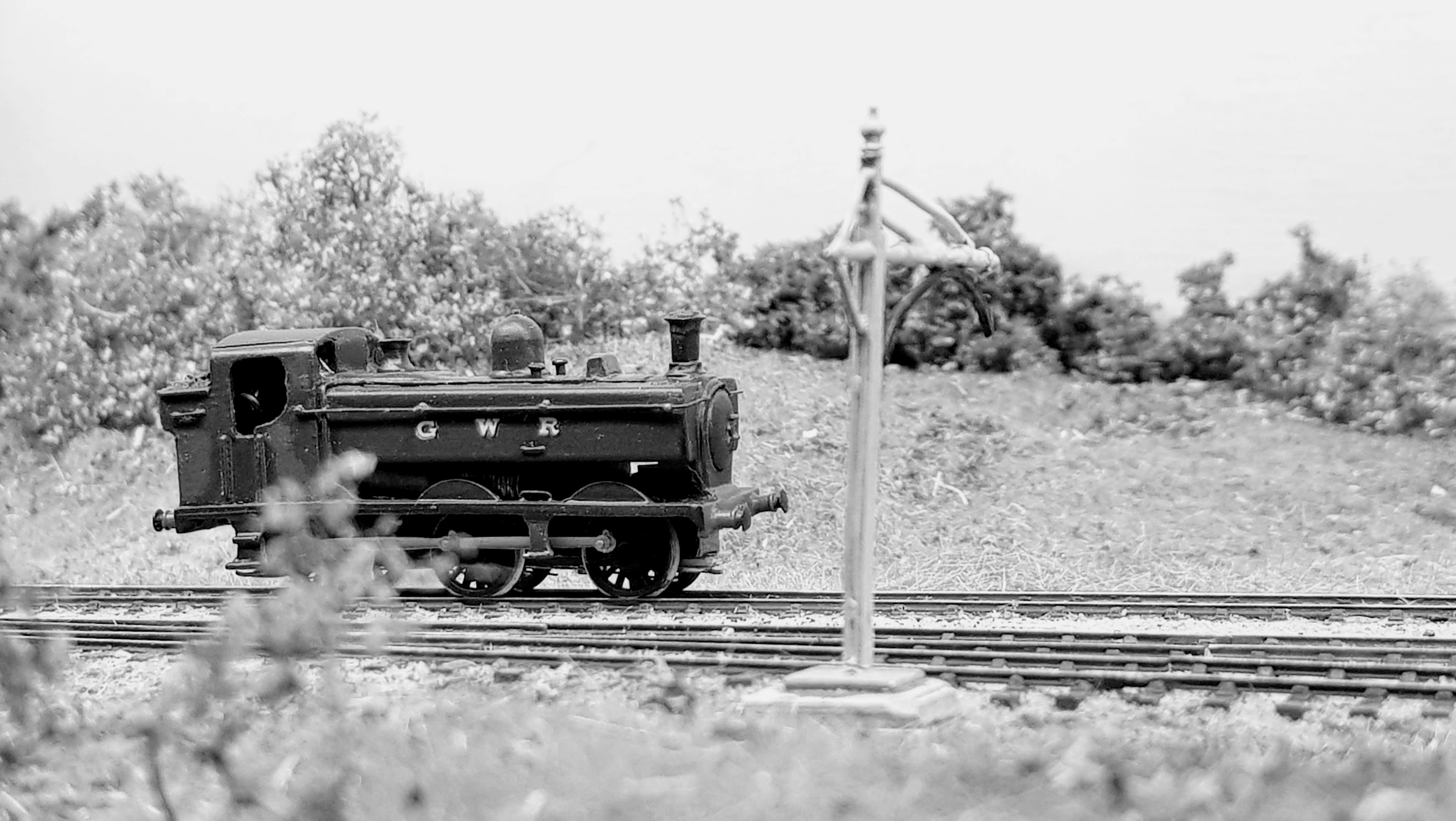
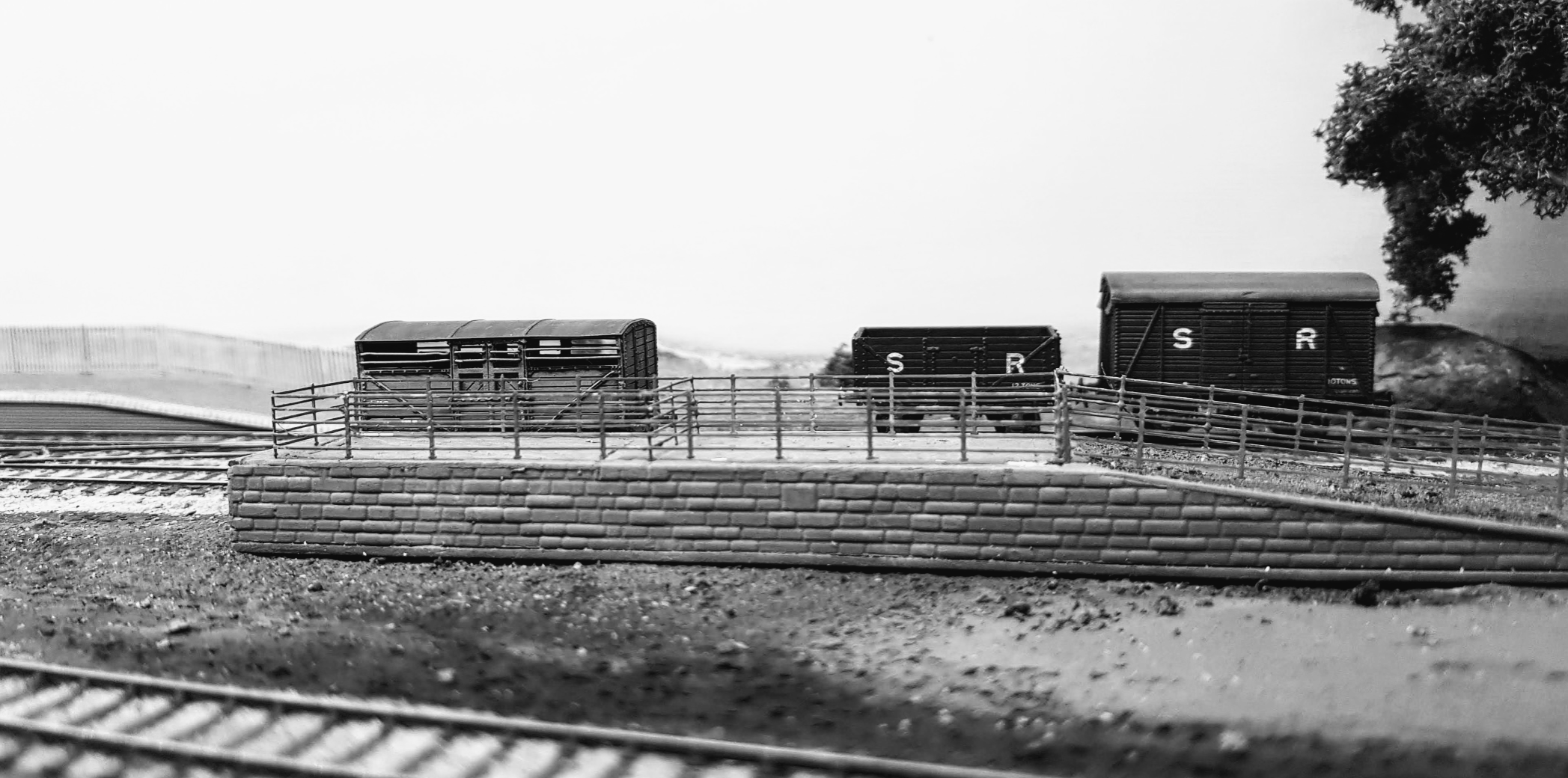
Some arty black and white shots
An overall view of the layout at the point it was sold is below
Operations
Operationally this layout was not well developed – I had not decided on the type of coupling I wanted to use and so my stock was loose shunted.
Passenger services were met with a Dapol/Farish two coach B-set or auto-trailer, and goods services (such as they were!) were provided by 2mmFS Association kits
Positives
- My first real experience to the demands of finescale, which I generally enjoyed
- Highly defined location/time period meant that less mental energy was expended in decisions and choices
- Limited layout size made it straightforward to bring to a level of completion.
Negatives
- I didn’t spent enough time fettling the trackwork before I started on scenic work, so it wasn’t perfect
- With a desire to fit all pointwork on-layout I ended up with very short bits of track, and as a result troubleshooting was difficult
- I did not plan effectively for connections to the cassette fiddle yard, which ended up being very dissapointing
Lessons Learned
- More constraints made it easier to be successful.
- There is a need to plan for the WHOLE layout (not just the visible section) from the get-go.
- You can’t polish out bad trackwork.
 Interlocking
You must be logged in to post a comment.